Guides
Dumpster rental downtime: what it actually costs per idle day
Dumpster rental downtime costs far more than the repair: turns lost per day out of service, a damage catalog, and the evidence that settles attribution.
What to take away
- Dumpster rental downtime has a price per idle day, and it never reaches an invoice. A 20-yard box on a weekly rental cycle loses about $20 to $45 a day in contribution. A three-week wait in the yard costs $400 to $900.
- A container out of service costs you its contribution per turn, divided by how long that turn takes. A truck out of service costs you the whole day's moves. Against a box that turns every day, the truck's lost day is roughly an order of magnitude worse, which is why the truck gets the maintenance budget.
- Damage in this trade divides cleanly into damage you cause, damage caused to you, and damage nobody can attribute. Only the third category is genuinely expensive, and photographs are what shrink it.
- Most downtime is not caused by dramatic failure. It is caused by parts that were not on the shelf: a latch, a hinge, a length of hydraulic hose.
The cost of a container out of service
Repair cost is easy to see. Downtime cost has to be calculated, and the calculation needs three numbers most haulers already have.
Idle Day Cost Formula
- Kcontribution per turn
- Tturn time in days
- K ÷ Tcost per idle day
- Days waitingdominates working days
Let K be the contribution one turn produces after disposal, drive time and handling. Let T be turn time in days. A container completes roughly one turn every T days, so each day out of service costs about K divided by T.
Market rates fill in the numbers. Budget Dumpster and Dumpsters.com both quote 15 to 20 yard roll-off boxes at roughly $400 to $600 a week in most markets as of 2026, with a tonnage allowance that changes by size.
Waste Management and Republic Services, the two largest US haulers, publish per-size roll-off pricing by ZIP code in the metros they serve directly. Casella Waste Systems works much of the Northeast, where rates sit at the top of that band.
Disposal takes the next bite. The national average landfill tipping fee has run near $60 to $75 a ton in recent years, and Northeast landfills have charged $100 and up.
A 20-yard box on those rates returns roughly $150 to $300 in contribution per turn. Divide by turn time and the idle day shows up: a weekly rental box, where T is near 7, loses about $20 to $45 a day.
A 15-yard construction box swapped the same day it comes back, where T is near 1, loses the whole contribution instead, $150 to $300 a day.
Multiply by the days the unit actually sat waiting. That includes the days before anybody noticed, the wait for a part, and the shop time. In most small operations the waiting dominates the working, which is the useful finding.
A three-week wait on a box losing $30 a day costs about $630, and the box never left the yard.
Then compare that against the repair invoice. A replacement hydraulic hose assembly typically runs $40 to $120, and a latch or hinge set $100 to $400, both carried by Fastenal, Grainger and Motion Industries.
Owners routinely defer a repair to avoid a bill and lose several times its value in turns that did not happen. A $100 hose deferred three weeks on the same box costs about $630 in lost turns. Running this calculation once changes how quickly things get fixed.
The cost of a truck out of service
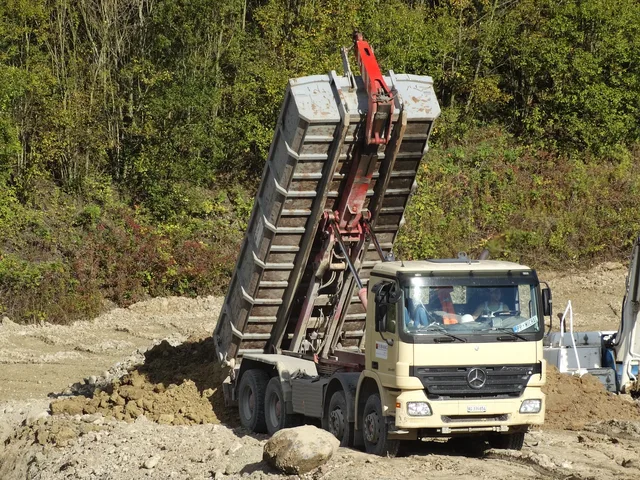
One vehicle down is every job down.
Truck Down Daily Cost
- Mmoves per working day
- Kcontribution per turn
- M × Kcost per day off road
- Plusreschedules, missed cutoffs, blocked bookings
Let M be the moves your truck completes in a working day and K the contribution per turn. A day off the road costs about M times K.
A roll-off truck on residential and small commercial work typically makes 8 to 12 moves a day. At $150 to $300 contribution per turn, a down truck costs $1,200 to $3,600 a day.
M runs 8 to 12, so the truck's day is about ten times what a fast-turning box loses in the same 24 hours. That is the order of magnitude that moves a repair to the front of the queue.
Add the cost of the disruption: customers rescheduled, pulls that missed the facility cutoff, and containers left sitting full on jobs where they now block the next booking.
That last effect is the one that lingers. A truck down for a day damages turn time across the whole fleet for the rest of the week, because every delayed pull extends the cycle of the container involved.
A new roll-off truck, chassis and hoist together, typically runs $150,000 to $200,000. That price is why the hoist gets fixed the day it fails and the bent rail on a box waits.
The damage catalog
| What happens | Usual cause | What it actually costs |
|---|---|---|
| Bent or worn main rails | Dragging a loaded container over a curb or a lip | A day or two out of service, plus a rail repair that typically runs $600 to $1,500 at a fabrication shop |
| Thinned or holed floor | Abrasive material, and years of it | A floor replacement typically $1,200 to $2,500, against a new 20-yard box at $4,500 to $6,500, so retirement becomes the cheaper call |
| Damaged door, hinge or latch | Overfilled loads forcing the door, and improvised repairs on top of that | Latch and hinge sets typically $100 to $400, plus frequent small downtime and a load that cannot be safely opened |
| Cracked cross members | Setting a loaded box down on uneven ground | Structural repair that typically runs $800 to $2,000 at a fabrication shop, and a safety question until it is done |
| Cable or hoist component failure | Wear inspected by glance rather than along its length | The whole truck-day, $1,200 to $3,600, immediately |
| Surface damage at a customer property | Protection not laid, or laid after positioning | A driveway or apron repair that typically runs $500 to $2,500, a claim, and often a lost customer |
| Container refused at the gate | A prohibited item nobody saw at the drop | A container out of service, a wasted afternoon, a hand-sorting job, and a second tipping fee at $60 to $75 a ton |
Six of those seven are prevented at a specific moment by a specific habit, which is what makes them worth listing rather than treating as bad luck. Those habits are set out in the delivery and maintenance guide, and the inspection cadence that catches them early is in the preventive maintenance checklist.
Damage Catalog: Cause vs Cost
Damage
- Bent main rails
- Dragging over curb
- Thinned floor
- Abrasive material, years
- Damaged door
- Overfilled loads forced
- Cracked cross members
- Set down on uneven ground
- Cable failure
- Glance inspection, not length
- Property surface damage
- Protection not laid
- Container refused at gate
- Prohibited item at drop
Usual Cause
- Bent main rails
- Out of service, loads badly
- Thinned floor
- Large repair or retirement
- Damaged door
- Frequent small downtime
- Cracked cross members
- Structural repair, safety question
- Cable failure
- Whole truck-day, immediately
- Property surface damage
- Claim, lost customer, review
- Container refused at gate
- Out of service, hand-sorting job
What It Costs
- Bent main rails
- Thinned floor
- Damaged door
- Cracked cross members
- Cable failure
- Property surface damage
- Container refused at gate
Damage you cause against damage caused to you
Three categories, and they behave differently.
Who Caused the Damage
Category
- Damage you cause
- Prevention plus evidence
- Damage caused to you
- Terms said so before job
- Damage nobody can attribute
- Inspection at every return
Defense
- Damage you cause
- Ground photos before and after
- Damage caused to you
- Photo of loaded container
- Damage nobody can attribute
- Condition at known point in time
Evidence Needed
- Damage you cause
- Damage caused to you
- Damage nobody can attribute
Damage you cause. A cracked driveway, a marked apron, a gate clipped on the way in. These are your cost and the only real defense is prevention plus evidence. Photograph the ground before placement and after the lift, every time, without exception. That single habit converts an unwinnable argument into a documented conversation.
Damage caused to you. Overfilling, a customer's machine hitting a container, prohibited material that had to be removed. These are recoverable only if the terms said so before the job started and you can show what happened. A photograph of the loaded container before it moves is what makes that possible.
Software built for this trade, such as ServiceCore, keeps those photos attached to the job record, which is where they are worth having three months later.
Damage nobody can attribute. The expensive category. A container comes back with a dent and nobody knows whether it happened on the last job, in the yard, or in transit. Inspection at every return is what shrinks this category, because it establishes the condition at a known point in time.
Where downtime actually comes from
Not from catastrophic failure. From four ordinary things.
Four Ordinary Downtime Sources
- Damage not noticed at return
- Parts not stocked for small repair
- Repairs queued behind each other
- Unit nobody's job to chase
Each has a cheap fix: inspect at return, hold the parts you cannot wait for, book repairs like jobs, and give every out-of-service unit an owner and a date.
None of this requires a system, only a habit. Fastenal runs bin-stock programs that put latches, hinges and fittings on your shelf, and Grainger and Motion Industries build hydraulic hose assemblies at their branches.
If you want the schedule in software instead, Fleetio and MaintainX both keep work orders against a unit record, which is where the downtime column comes from.
Doing the repair safely
The hoist and the truck store energy in hydraulics and in raised components, which makes servicing them a distinct hazard from operating them. OSHA's standard on the control of hazardous energy covers lockout and tagout for servicing and maintenance. Small operations are where this is most often a habit rather than a written procedure.
A lockout padlock and tag set typically costs $20 to $60 from Brady or Master Lock. Hoist builders such as Galbreath and American Roll-Off publish cable, chain and hydraulic inspection intervals in the manual that ships with the unit.

The yard adds its own risk, since repairs happen in the same space where steel is moved by machine and people are on foot. OSHA's material on powered industrial trucks covers operator competence, inspection and pedestrian traffic. The equipment choices that make maintenance easier or harder in the first place are discussed in the equipment and setup guide.
Recording it, and knowing when to stop repairing
Log every incident against a unit number: what happened, the date, the cause if known, the repair cost, and the days out of service. That last column is the one nobody keeps and the one that answers the retirement question.
Multiply those days by the daily contribution for that size and the column turns into money. A unit down 40 days in a year at $30 a day has already spent $1,200 of its replacement cost.
When a unit's annual downtime cost plus repair cost approaches the cost per year of replacing it, the unit is finished as an asset regardless of how sound it looks. A used 20-yard box typically sells for $2,000 to $3,500 and a new one for $4,500 to $6,500, so that day arrives earlier than most owners expect.
The record is also a financial one, and the Internal Revenue Service describes the records a business is expected to keep in support of assets and expenses.
If downtime clusters in jobs from one area or one customer type, read it as information about the work, not the steel, and the guide to assessing markets explains those patterns.
If downtime clusters around long drives and roadside trouble, geography may be the cause. See the article on planning delivery routes. The same job files feed the monthly sample in the service quality checks.
Common questions
Should I charge customers for damage to containers?
Only where your terms said so in advance and you have evidence. A latch and hinge job typically costs $100 to $400, and a charge introduced after the fact usually costs more in goodwill than it recovers in cash.
How much should I hold in spare parts?
Enough to cover the failures that stop a unit for want of something small: latches, hinges, cable or its equivalent, and hydraulic hoses. A bin of those parts typically runs a few hundred dollars. The test is whether a part's absence would cost more in downtime than the part costs to stock.
Is it worth insuring against downtime?
Ask a broker what is available and what it excludes, since the terms vary considerably. Equipment breakdown coverage is usually written as an endorsement on a commercial property policy. Prevention and spare parts are the reliable answer for a small fleet.
How do I prove a customer overfilled a container?
Photograph the loaded container in place before it moves, with the number visible. A 20-yard box is usually rated for 3 to 4 tons. When the weigh ticket comes back at six, that picture and the ticket together settle it.
What should I fix first when several units are down?
The one in the size you dispatch most, because availability is size-specific and a shortage in one size cannot be covered by surplus in another. A truck with a failed hoist cable outranks every container on the list, at $1,200 to $3,600 a day.