Guides
What a new dumpster rental business owner needs to buy: the equipment list
Dumpster rental equipment guide: cable hoist against hook lift, matching container length to the hoist, choosing sizes, and laying out a workable yard.
What to take away
- A new dumpster rental business owner needs to buy one roll-off truck with a matched hoist, a small set of compatible containers, a cover system, securement gear, PPE, hand tools, and dispatch and accounting software.
- Buy the truck and hoist first, then containers. The hoist's reach and capacity decide which boxes the truck can pick up. A mismatch shows up on a driveway with a customer watching.
- Container sizes are sold in cubic yards, but customers care about wall height and rear door width. Those dimensions decide whether a job can be loaded at all.
- A yard needs turning room more than storage space. Stacked steel you cannot reach is inventory you do not have.
- Every item on this equipment list moves multiple tons under power. Maintenance and lockout habits belong in the purchase decision, not in a later policy document.
The equipment list, item by item
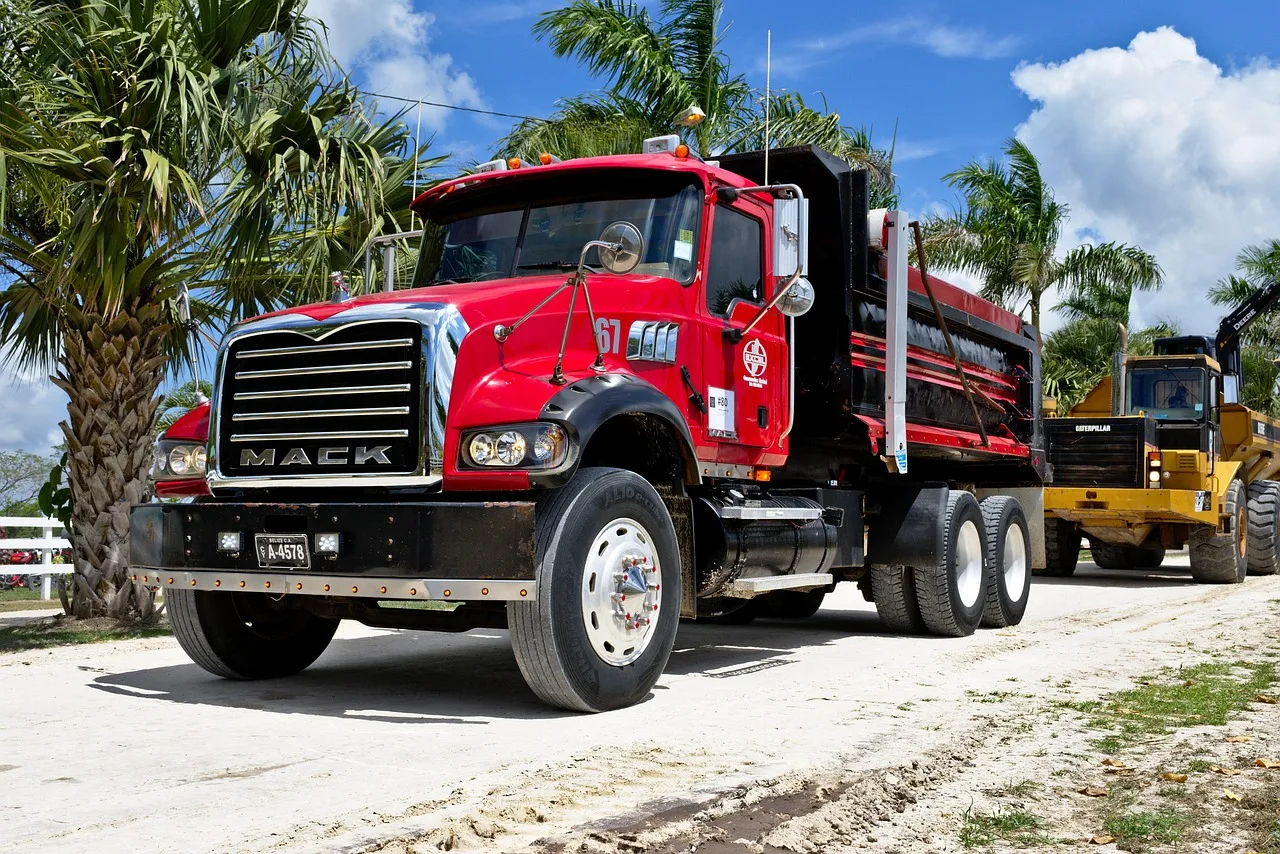
- Roll-off truck chassis.Freightliner M2 106, Peterbilt 337, Kenworth T370, International MV Series and Ford F-650 are common chassis. New truck with hoist typically $140,000 to $200,000 as of 2026. Used $45,000 to $95,000 depending on hoist and miles.
- Cable hoist.American Rolloff, Galbreath, Wastequip and Dragon build cable hoists. A new 60,000 lb capacity hoist typically costs $20,000 to $35,000 installed. It uses a winch line to pull containers up rails.
- Hook lift.Stellar Shuttle, SwapLoader SL series, Palfinger T series and Hiab Multilift XR are common. Capacities often range from 12,000 lb to 33,000 lb. New units typically $25,000 to $45,000 installed. They use an arm and hook bar.
- Containers.Wastequip, Bayne and Perkins build open-top roll-off containers. Common sizes are 10, 15, 20, 30 and 40 cubic yards. New 20-yard boxes typically $2,800 to $4,200; 30-yard $3,500 to $5,500; 40-yard $4,500 to $7,000.
- Cover system.Roll-off tarp systems from Pioneer, Donovan or US Tarp typically cost $800 to $1,800 installed. A tarp keeps the load covered and is part of securement.
- Securement gear.Buy ratchet binders, grade 70 transport chain, nylon straps and wheel chocks. FMCSA cargo rules apply. A typical kit costs $300 to $800.
- PPE.Hard hat, high-visibility vest, safety glasses, cut-resistant gloves and steel-toe boots. 3M, Honeywell and MSA sell these. Typical cost is $150 to $350 per driver.
- Hand tools.Milwaukee M18 impact wrench, Lincoln grease gun, 4 ft pry bar, sledgehammer and torque wrench. Typical cost $800 to $1,500.
- Spare winch cable and sheaves.For cable hoists, keep a spare cable and sheave set. Cable is a consumable. Typical cost $250 to $600.
- Dispatch and accounting software.Jobber, ServiceTitan, Docket and QuickBooks Online are options. Dispatch plans typically $30 to $200 per user per month. QuickBooks Online plans typically $30 to $90 per month.
- Lockout/tagout kit.For hoist, forklift and loader service, a lockout kit with padlocks and tags typically costs $100 to $300. OSHA 1910.147 applies to servicing and maintenance.
The truck decides everything downstream
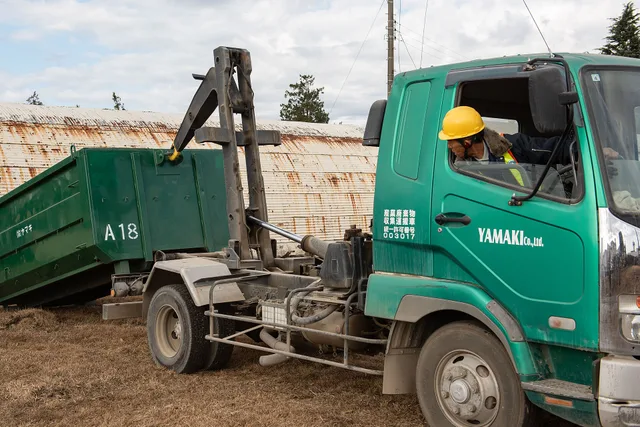
A roll-off truck is a hoist bolted to a chassis. The hoist constrains you. Its reach sets the longest container you can pick up. Its capacity sets the heaviest. Its style sets how a container behaves when it lands.
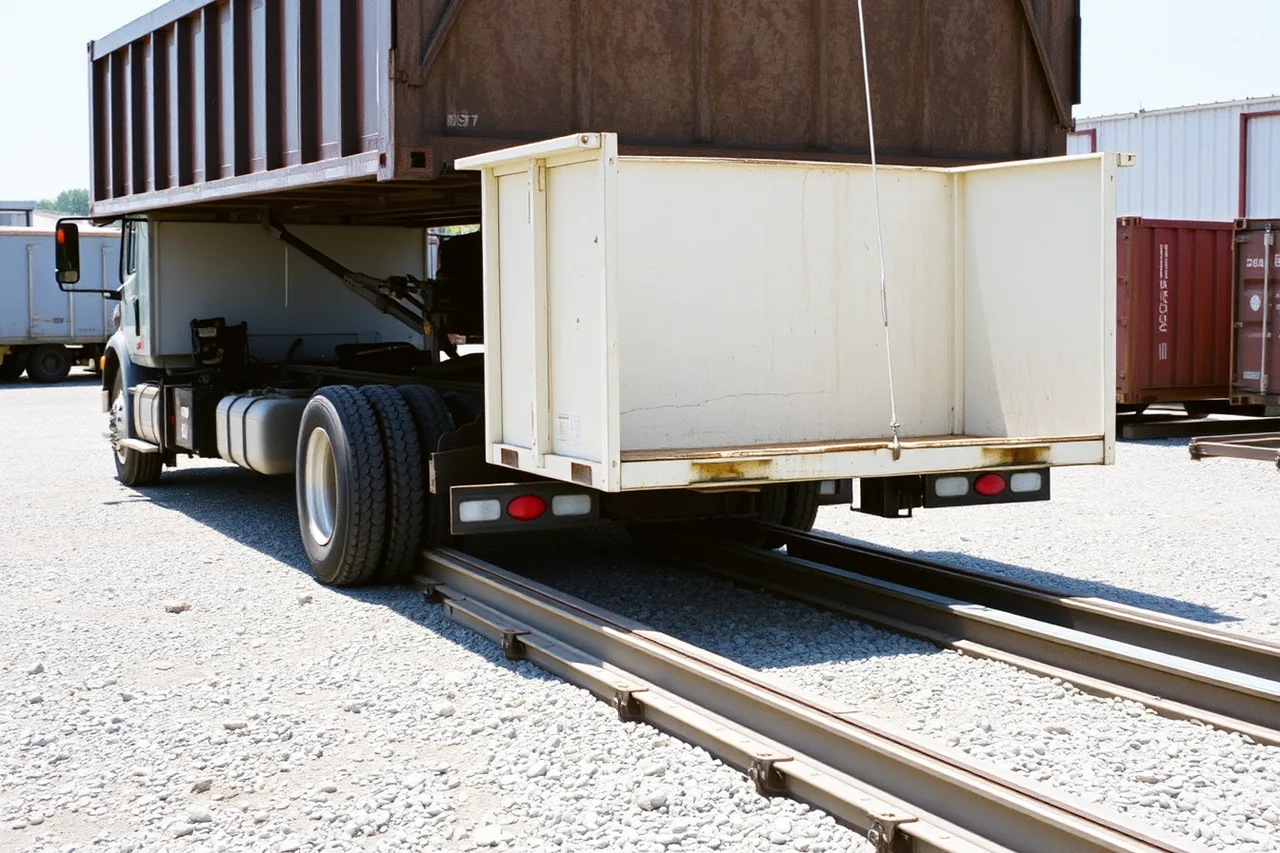
Get those three numbers from the manufacturer of the specific unit, in writing, before you buy anything to put on it. Sellers quote container sizes in cubic yards, which describes volume and says nothing about length or weight. Two containers of the same nominal capacity can differ in both.
What the loaded vehicle may legally weigh, and how axle weight has to be distributed, is set by your state and the roads you use. That question belongs to your state transportation authority, not a dealer. Settle it before purchase because it can rule out combinations that look sensible.
The load also has to stay on the truck. The Federal Motor Carrier Safety Administration publishes rules for securing cargo. They include provisions for roll-on, roll-off and hook-lift containers. Read them with the spec sheet because securement is part of the equipment decision.
Cable hoist against hook lift
The two common systems load a container in different ways. The difference shows up in daily work rather than in the brochure.
Cable hoist
- How it loads
- Winch line pulls the container up the rails
- What it is good at
- Open top containers, dragging a box that has settled or sunk
- Where it costs you
- Cable wear is a consumable, and the line is a service item that needs watching
- What breaks the day
- A frayed or fouled cable stops the truck
- Buying used
- Wider pool of compatible containers
- Named examples
- American Rolloff, Galbreath and Wastequip cable hoists
Hook lift
- How it loads
- Arm engages a hook bar and rolls the body on
- What it is good at
- Speed, and swapping between body types on the same chassis
- Where it costs you
- Requires containers built for the hook bar, which narrows your used market
- What breaks the day
- A container with a damaged hook bar cannot be picked up at all
- Buying used
- Compatibility must be confirmed unit by unit
- Named examples
- Stellar Shuttle, SwapLoader SL, Palfinger T and Hiab Multilift XR hook lifts
Neither is correct in general. The fleet you intend to own and how you expect to buy used decides it. An operator growing through opportunistic used purchases gets more from wider compatibility. An operator running many moves a day in a dense area gets more from speed.
Whichever you choose, write the compatibility rule down and give it to whoever shops for containers. This is the most common expensive mistake in the first year. It is avoidable with one sentence in a purchasing note.
Choosing container sizes, and why fewer is usually right
Every size you add fragments the fleet. With one size, any available box serves any booking. With four, the box a customer wants is often the one on somebody else's job while three sit idle in your yard.
The question is not which sizes exist. It is the smallest set of sizes that covers the work you intend to sell.
Wastequip, Bayne and Perkins build open-top containers in 10, 15, 20, 30 and 40 cubic yard sizes. Typical new prices as of 2026: 10-yard $1,800 to $2,800; 20-yard $2,800 to $4,200; 30-yard $3,500 to $5,500; 40-yard $4,500 to $7,000.
Ask three things of each candidate size. Does the wall height let someone lift material over the side without a struggle, or does the job need a walk-in door? Does the footprint fit a typical driveway without blocking the garage?
Does a full one stay within the weight your truck and roads allow with the densest material you accept?
That third question is where new operators get caught. A large container filled with heavy debris can exceed limits long before it is visually full. The honest answer is to sell the smaller box for dense material and say why. Do not deliver the big one and discover the problem at the scale.
Worked example: matching a hoist to a container before you buy
Run this before any container purchase, including a used one at a good price.
Matching a hoist to a container
- Write down the hoist manufacturer's stated maximum container length and rated lifting capacity for your exact unit.
- Get the seller to state the container's overall length, not its nominal cubic yards, and its empty weight.
- Confirm the rail spacing and, for a hook lift, the hook bar height and dimensions, against your truck's requirement.
- Add the container's empty weight to a realistic loaded weight for the material you actually haul. Check that total against both the hoist capacity and your vehicle's legal limits.
- If any of the four numbers is unavailable, treat the purchase as unverified. A container you cannot pick up is scrap you paid a delivery fee for.
Example: a Stellar Shuttle 20,000 lb hook lift and a used 20-yard Wastequip container. You still need the container's overall length, empty weight and hook bar height before cash changes hands.
The step people skip is the second one. Nominal size is a marketing number. Overall length is the number the hoist responds to.
Setting up the yard
A yard is a maneuvering problem. You need room to back a truck with a container extended. You need room to set boxes down and pick them up without moving three others first.
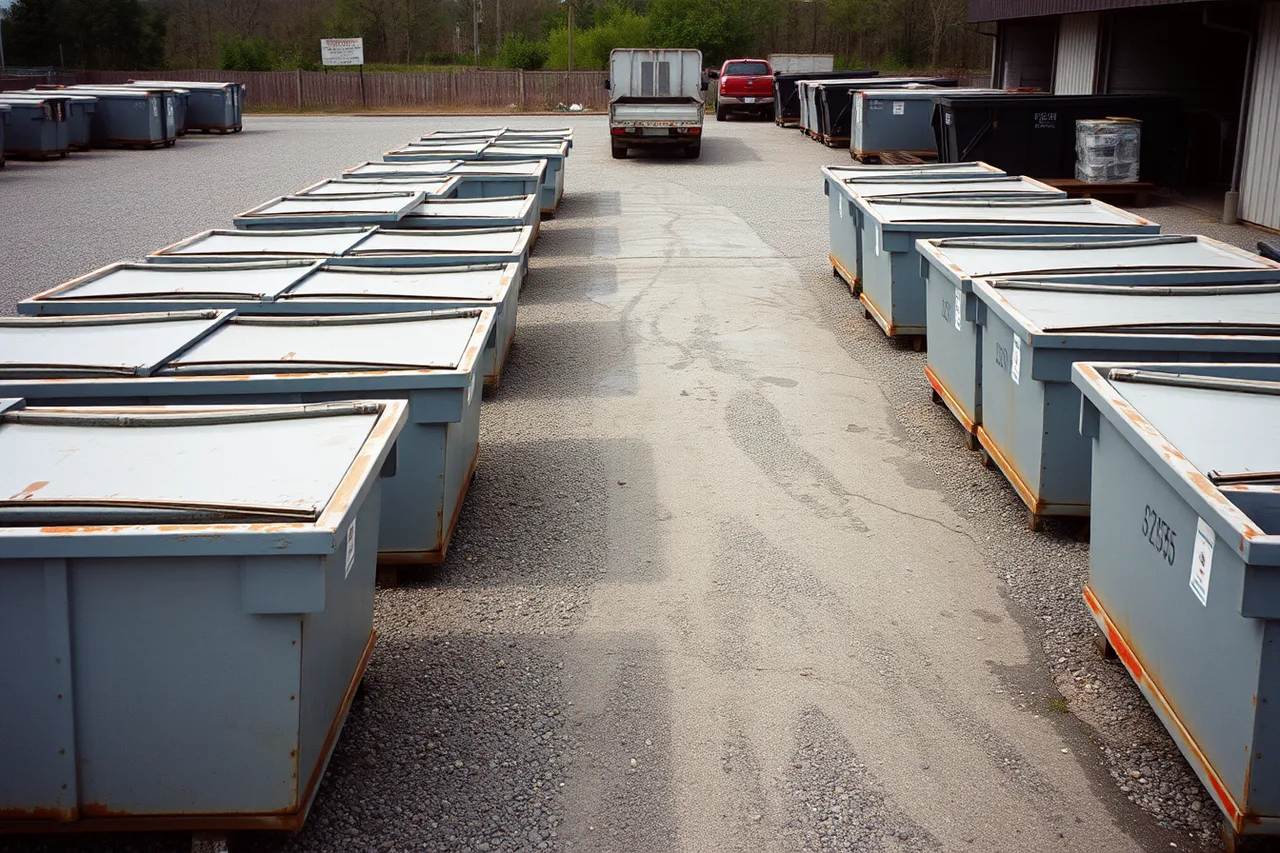
The surface must survive a loaded container dropped on it in wet weather.
Lay it out so the containers you use most sit nearest the exit. Keep a defined lane clear rather than filling every square foot. The day you fill it is the day a driver spends twenty minutes shuffling steel to reach one box.
If you use a forklift or loader in the yard, operator competence and traffic questions are real. Toyota, Yale and Hyster build common yard forklifts. Caterpillar and Bobcat build wheel loaders and skid steers. OSHA's overview of powered industrial truck hazards covers training, inspection and pedestrian considerations.
A yard with a truck reversing and a machine moving at once needs a written rule on who moves when.
The same applies to the broader habit. OSHA's guidance on building a safety and health program describes the shape of one for a small employer. The version that works in a two-truck operation is short, written down and actually used rather than a binder.
What to record from day one
Equipment decisions are only as good as the record of what you own and what it has cost you.

Number every container and paint the number where a driver can read it from the cab. Keep one line per unit: purchase date, purchase cost, source, repairs with dates, and jobs it has been on.
That record does two jobs. It shows which units are quietly expensive. It supports the asset side of your books.
The Internal Revenue Service sets out what records a business is expected to keep in support of purchases and assets. Equipment is exactly the category where a missing invoice becomes a problem years later.
Software helps. QuickBooks Online, Jobber, ServiceTitan and Docket are common choices. Accounting plans typically run $30 to $90 a month. Dispatch plans typically run $30 to $200 per user per month as of 2026.
How much steel to buy in the first place is a market question rather than an equipment one. the startup and market guide works through sizing a fleet from turn time rather than from a catalog.
Common questions
Should a first truck be new or used?
Used is normal in this trade. The hoist is what to inspect rather than the odometer. A tired chassis with a sound hoist is a different proposition from a clean chassis with a hoist that has been rebuilt twice.
How many containers per truck?
Enough that the truck is never waiting for a box to come free. Not so many that steel sits in the yard for weeks. That ratio comes out of your turn time, not a rule of thumb.
Are tarps worth the trouble?
A covering system is part of keeping the load where it belongs. That is a securement question rather than a convenience one. Ask the agency that regulates your vehicle what applies to you. Buy the system that makes compliance the easy option for a driver in the rain.
Do I need a walk-in door on every container?
No, and doors are a maintenance item. They earn their place on the sizes used for heavy material that has to be wheeled in rather than lifted over a wall.
What single piece of equipment do owners most regret buying?
A container size bought for a job type they did not end up selling. It sits in the yard, does not fit the rest of the fleet's use pattern, and resells slowly.
What brands should I price for a first hoist?
Price American Rolloff, Galbreath and Wastequip for cable hoists. Price Stellar Shuttle, SwapLoader and Palfinger for hook lifts. Match the model's rated capacity and container length to your planned containers.