Guides
Atlanta Dumpster Rental Dispatch: Street Permit Workflow
Dumpster rental dispatch in Atlanta can stall when street placements need local approval. Use an address-based permit check and daily board to protect routes.
What to take away
- A missing permit for a public Atlanta street placement can delay dumpster rental dispatch. An approved Department of Public Works right-of-way permit is required; a driveway placement usually needs none.
- Metro Atlanta has no single dumpster permit. The city, the core counties and each incorporated city issue their own approvals.
- Fees and review windows differ by counter, so a same-day street placement promise is unsafe.
- Tag every address with its permit authority and run a daily permit board. That helps catch placement holds before a truck rolls.
- Unapproved placement can end in a removal order, a fine and a wasted run.
How local permit boundaries affect Atlanta dispatch
There is no Atlanta dumpster permit. There is a stack of local ones, and one afternoon queue can involve multiple authorities.
Which authority permits a bin
| Address type | Permit authority | What dispatch confirms |
|---|---|---|
| Inside the city limit | Atlanta Department of Public Works | Right-of-way application, placement sketch, safety markings |
| Unincorporated Fulton | Fulton County public works | County form, fee and review window |
| Unincorporated DeKalb, Cobb, Gwinnett, Clayton | That county's public works office | Local counter rules and local fee |
| Marietta, Alpharetta, Decatur, East Point | The city itself | City permit or written exemption |
| Private driveway or lot | No street permit | Written permission from the owner |
State waste-handling and transport requirements are separate from local street placement approval. A state requirement does not tell dispatch which local authority controls a specific address.
Fulton County approval does not travel into the city, and city approval does not travel out. A route planned on ZIP codes will cross that line and stall.
Counties and cities each run their own counter. The approvals a new hauling business needs are listed in which permits a dumpster rental business needs before opening in 2027.
A dispatch workflow for Atlanta right-of-way approvals
For placement on Atlanta city streets and public right of way, start with the Atlanta Department of Public Works and confirm current requirements before quoting a customer. Review the Department of Public Works guidance.
Fees across metro counters typically land in the $50 to $250 range for a short street placement. Review windows commonly run two business days to two weeks. Treat both as typical ranges and confirm at the counter, because duration and street class change the number.
Atlanta DPW right-of-way application
- Confirm the address is inside the city limit and the bin lands in public right of way.
- Submit the current right-of-way application with a placement sketch, dates and a traffic plan.
- Pay the fee and log the application number against the job.
- Collect the approval conditions in writing.
- Place the bin only after approval, and remove it before the permit expires.
Approval conditions usually name cones, reflective tape and sometimes barricades. A driver who arrives without them can be turned away at the curb.
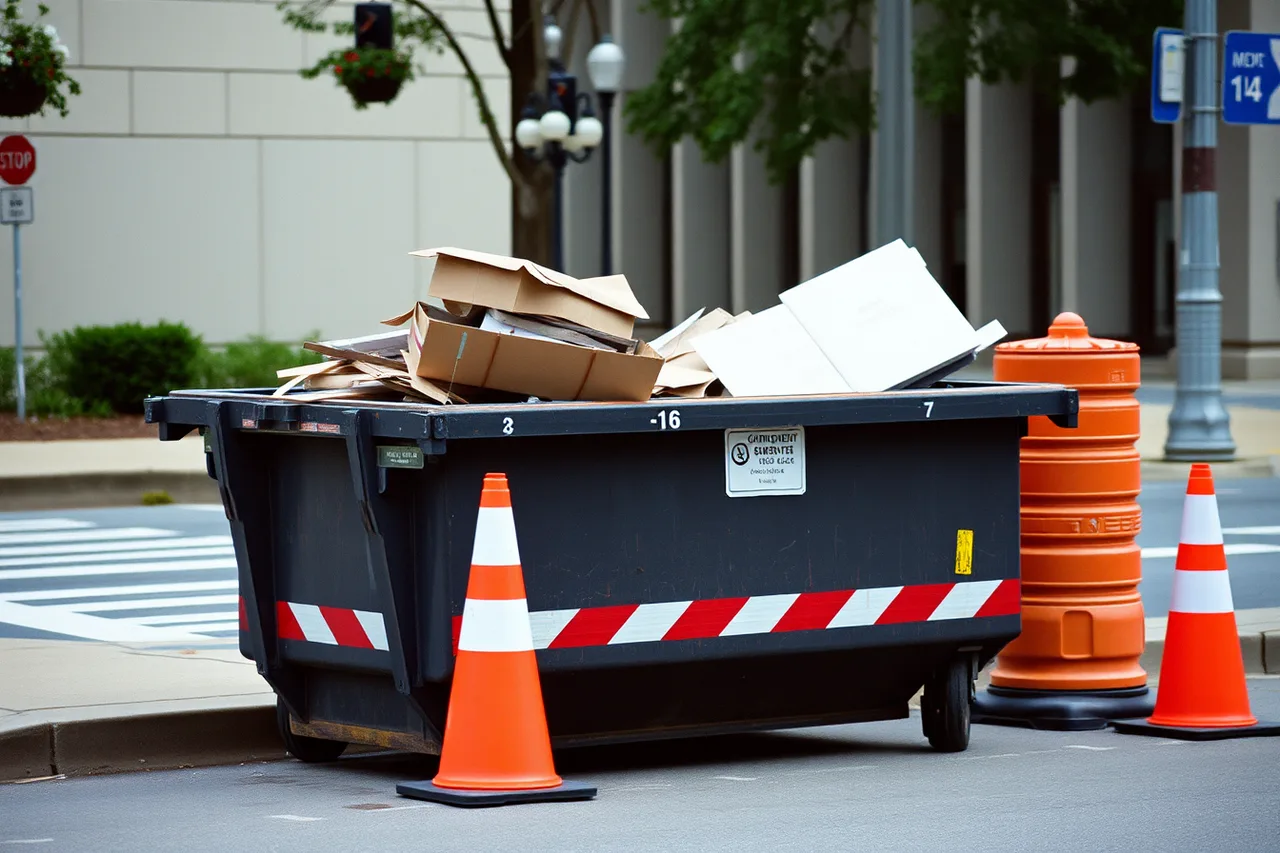
A bin that blocks a hydrant, bus stop or storm drain inlet will not be approved. Review is not instant, and a dispatcher who promises same-day street placement inside the city is promising something the counter may not deliver.
Street, sidewalk and rowhouse placement limits
A sidewalk placement must leave a clear pedestrian path, not a squeeze past the container.
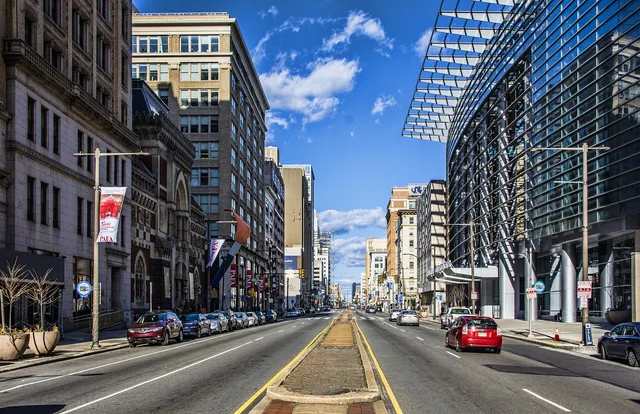
On tight Atlanta blocks, parking and narrow right of way can complicate placement. The container-sizing and routing issues discussed in Philadelphia narrow-street dumpster dispatch offer a useful comparison, but Atlanta jobs still require local approval.
Where a street placement will not work, the fallback is a driveway or a private lot. Put the property owner's permission in writing so a verbal okay does not leave dispatch exposed if a neighbor complains.
Example: two Atlanta addresses and one routing decision
Picture Tuesday's board with two jobs. The first is a rowhouse on Boulevard SE inside the city, where the only legal spot is the right of way. The second is a lot near Buford Highway outside any city limit.
The second job ships in its normal slot because no street permit applies. The first job holds until the permit number is in the system, and a permit-free job is pulled forward to fill the gap.
Dispatch routing that treats a permit as a constraint
Routing is where permits and speed meet. An unapproved street placement does not go out, the same way an overloaded truck does not. The discipline behind dumpster rental delivery routes reviewed for 2027 applies here.
Hold a 30 minute cushion in the day for permit checks and re-routes. That absorbs one failed placement without wrecking the afternoon.
Keep a live note of slow counters. If one county office is backed up, push those jobs a day and fill the slot with permit-free work.
A delayed permit can also shift the planned disposal run. Keep the permit hold visible on the board so dispatch can reassign the truck rather than send it to a placement that cannot proceed.
Building the permit board that catches gaps before dispatch
Give one person the permit board. In a small fleet that is usually the dispatcher, with a weekly review by the owner.
- Every address tagged with its permit authority
- Permit status column on the day's board
- Application number and fee logged at booking
- Approval conditions copied to the driver sheet
- Expiry date flagged 24 hours ahead
- Slow counters marked and jobs moved
- Weekly review of failed placements
Daily Permit Board Routine
- Every street job has a permit authority
- Each permit has date, fee, status
- Approved permits show expiry and copy
- Expiring permits flagged three days ahead
- Failed placements logged with reason
- Jurisdiction review times recorded monthly
- Drivers confirm placement site before unloading
The board runs at the start of the day. Anything without a permit stays off a street placement. The booking call sets the dates the board protects, as covered in how to keep dumpster rental jobs on time.