Guides
Dumpster rental licensing requirements: who to ask first
Dumpster rental licensing requirements vary by location. See who to contact first, plus Philadelphia’s Commercial Activity License and Dumpster License.
What to take away
- There is no single dumpster rental license for every U.S. location. The required permissions depend on the places you serve, the materials you haul, and your equipment.
- This page names the offices to contact and gives a Philadelphia-specific licensing example; it does not treat that local example as a nationwide rule.
- Contact them in order. Each answer narrows the next question, and doing it out of order means asking a regulator about equipment you have not chosen.
- The output of this work is a folderone document or written answer per authority, dated, with a renewal date on it.
Six authorities, and what each one actually governs
| Authority | What it governs | The question to open with |
|---|---|---|
| State or provincial business registration | The existence of the entity and its trading name | What registrations does a business operating vehicles and equipment need here |
| The agency regulating the vehicle | The truck, the driver, and the load on public roads | Which of your requirements apply to a vehicle of this configuration doing this work |
| State environmental agency | How regulated materials must be handled, transported and documented | Which materials trigger requirements for a hauler, and what registration follows |
| The disposal facility | What may come through its gate, on what terms | What do you refuse, and what happens if it arrives anyway |
| Municipal permit office, per town | Containers placed on public streets and rights of way | What is the process, the lead time, and the marking expectation |
| Employment and workplace bodies | Wages, hours, classification, and workplace safety | What applies to a small employer with drivers |
The table is the whole map. What varies between readers is what each cell contains, which is exactly why the cells hold questions rather than answers.
In the United States, business registration usually runs through the Secretary of State or an equivalent state business-filing office, vehicle questions through the state department of motor vehicles (DMV) or equivalent, and waste questions through a state department of environmental quality or environmental protection. The name on the door varies by state; the function does not.
For a concrete local example, Philadelphia's guidance for a Dumpster License says applicants need a Commercial Activity License and must pay the Business Income & Receipts Tax (BIRT). See the Philadelphia dumpster-license page for the city's process.
Six authorities and what they govern
Authority
- Business registration
- Entity and trading name
- Vehicle agency
- Truck, driver, load
- Environmental agency
- Regulated materials
- Disposal facility
- Gate terms
- Municipal permit office
- Containers on streets
- Employment bodies
- Wages, hours, safety
Governs
- Business registration
- What registrations needed
- Vehicle agency
- Which rules apply
- Environmental agency
- Which materials trigger rules
- Disposal facility
- What do you refuse
- Municipal permit office
- Process and lead time
- Employment bodies
- What applies to small employer
Opening question
- Business registration
- Vehicle agency
- Environmental agency
- Disposal facility
- Municipal permit office
- Employment bodies
Two of these get underestimated. The municipal permit office is not one authority but one per town you serve, and the answers genuinely differ across a county line. The disposal facility is not a regulator at all, yet it can stop your operation faster than any of them by refusing a load.
The order to contact them in
- Register the entity first with the Secretary of State or equivalent state business-filing office. Everything else asks who you are, and answering with a plan rather than a registration slows every conversation.
- Talk to the disposal facility next, before buying equipment. What it accepts determines what you can sell, and what it refuses determines the language in your customer terms.
- Then contact the state department of environmental quality or environmental protection, with the facility's answers in hand. You will be asking a more precise question because of them.
- Then contact the state department of motor vehicles (DMV) or equivalent about the vehicle, and FMCSA about any federal motor-carrier requirements, once you know what you will haul and roughly what you will haul it with.
- Then contact the municipal permit offices in your two or three main towns.
- Then check the employment side when you are about to hirethe U.S. Department of Labor's Wage and Hour Division, your state labor agency, and OSHA each cover different workplace obligations.
Owners commonly reverse two and four, buy a truck, and then discover the material mix they planned to serve is not straightforward locally. The calls are free. The truck is not.
Order to contact the six authorities
- Register the entity first
- Talk to disposal facility before buying equipment
- Then state environmental agency
- Then vehicle regulator
- Then municipal permit offices
- Then employment side when hiring
Hauling on public roads
The vehicle carries the heaviest regulatory load in this business, and securement is the part most specific to roll-off work.
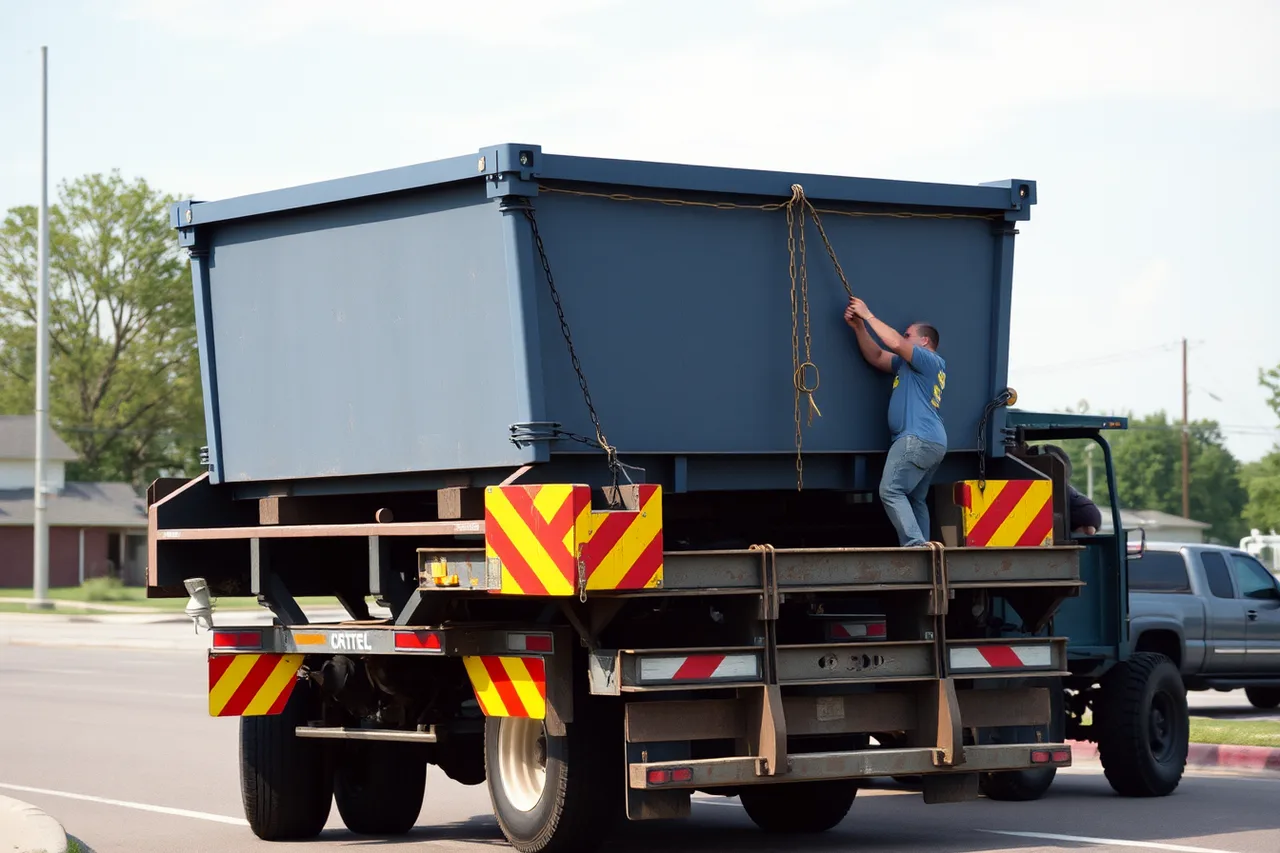
The Federal Motor Carrier Safety Administration publishes its cargo securement rules, including provisions for roll-on, roll-off and hook-lift containers.
Whether and how those rules apply to your vehicle, configuration and operation is a question for that agency and your state. Settle it in writing before the first delivery, not at a roadside inspection.
Your state sets weight limits, axle distribution, registration class, driver qualifications, and any credential the driver personally needs. Ask the state motor-vehicle agency whether the specific truck requires a commercial driver's license (CDL); ask FMCSA whether a USDOT number or motor-carrier operating authority applies to your vehicle, route, and operation.
What the equipment decision itself involves is covered in the equipment and setup guide. Read it before you make the call so the question is concrete.
The waste side, which is not one question
Ordinary construction and household debris, regulated waste, and materials with their own disposal programs are treated differently, and the boundaries are set by your state environmental agency rather than by any national summary. Ask specifically whether your materials or service require a solid-waste hauler permit, waste-transporter registration, or a separate authorization for a regulated stream. Permit names and triggers vary by state, so verify the exact requirement with the agency.
Waste questions to ask both sides
- Which materials trigger a registration or permit
- What documentation must travel with a load
- Which materials must not go in a general container
- Ask the facility the same questions
- Where answers differ, the stricter governs
- Write a customer-facing prohibited list
Write the result as a customer-facing prohibited list in plain words, and put it on the container and in the rental agreement. That list is the single most useful compliance artifact you will produce, because it moves the decision from a driver at a gate to a customer before loading.
Placement on streets and other people's ground
A container on private property is a contract question. A container in the roadway is a permit question, and the permit office is the authority.
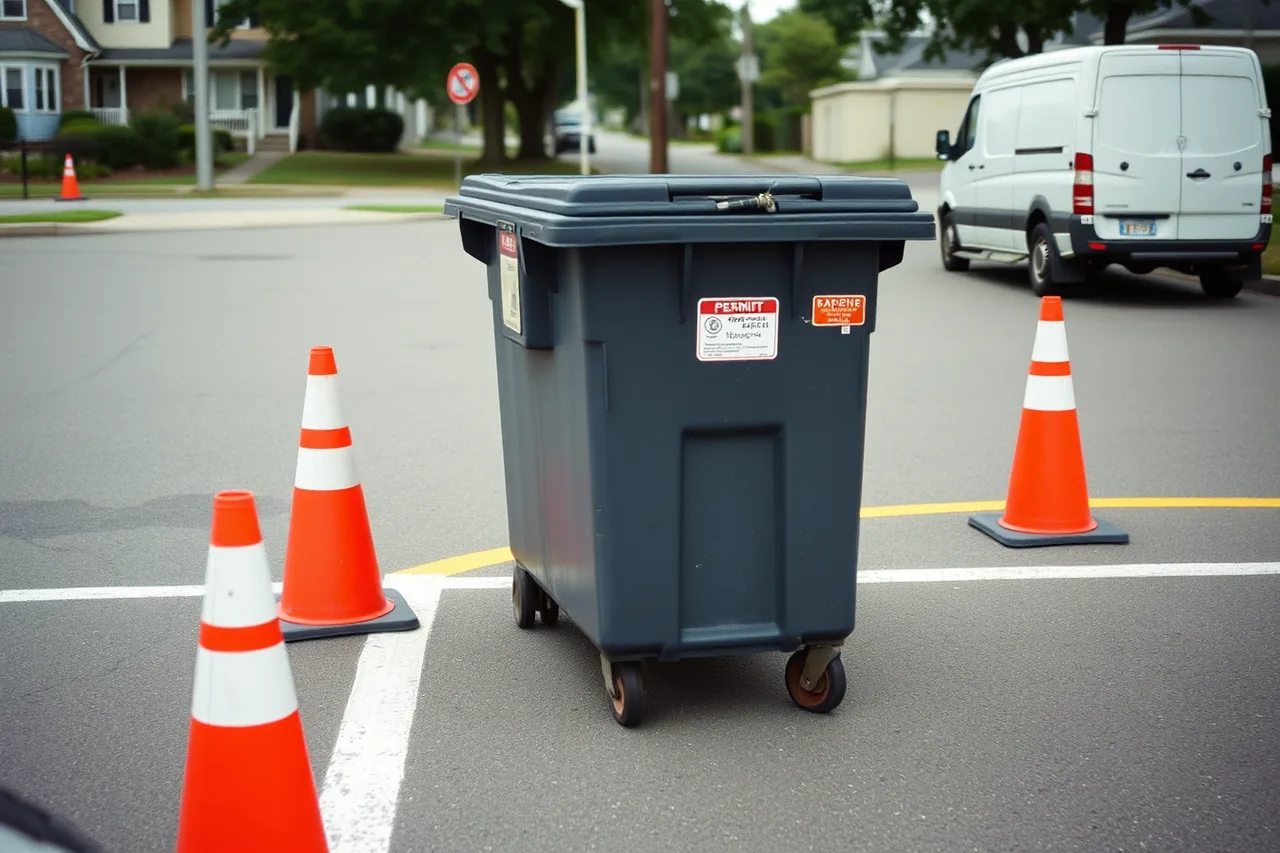
Ask each town what the process is, what it costs, how long it takes, what marking or lighting is expected, and how long a container may remain. Ask whether the permit is pulled by you or by the property owner, because that determines what your customer has to do before you can deliver.
Also settle your own placement policy for private ground, which is not a regulatory matter but is where most disputes start. Put the decision in your terms, not a conversation at the curb.
A loaded container concentrates weight on a small footprint. Plywood or matting protects a driveway and costs less than one argument about a cracked slab, and whether you insist on it is your decision.
The employer side, once there is a driver
The moment you hire, a new set of obligations attaches. Wage and hour rules, classification, recordkeeping and overtime are federal and state matters, and the Department of Labor's Wage and Hour Division publishes compliance assistance for new and small businesses explaining what it administers.
Workplace safety sits alongside it. A yard where steel is moved by machine while people walk carries real hazards, and OSHA's material on powered industrial trucks covers operator competence, inspection and pedestrian traffic. A small operation's program can be short. It cannot be absent.
If you keep an office, a counter or any space the public visits, accessibility obligations apply to it. The Department of Justice's ADA guide for small businesses sets out what that generally involves and where to get current guidance, and it is a question worth asking before a lease is signed rather than after.
Keeping it current
Compliance decays quietly. Rates change, permits expire, a town updates its process, a facility revises its accepted list.
Build one folder with one page per authority. On each page: who you spoke to, when, what they said, what document you hold, and when it expires or should be re-checked. Put the expiry dates in the same calendar as your vehicle inspections.
Then re-ask the disposal and permit questions once a year even if nothing appears to have changed, because those two move most often and neither will write to tell you. Where compliance affects what you can promise a customer, it belongs in the market reasoning in the startup and market guide rather than in a drawer.
Common questions
Is there a single license that covers this business?
No. Anyone who tells you otherwise is describing one jurisdiction and generalizing. The stack is the answer, and its contents are local.
Do I need a special credential to drive the truck?
It depends on the truck's weight ratings, configuration, route, and your state. Ask the state motor-vehicle agency whether the specific truck requires a commercial driver's license (CDL), and ask FMCSA whether a USDOT number or motor-carrier operating authority applies to the operation. Get an answer before buying, because the answer can change which truck makes sense.
What happens if a customer puts something prohibited in the container?
The facility refuses it, the load comes back, and somebody sorts it. The way to avoid that is a prohibited list the customer has seen and agreed to, and terms that say who bears the cost.
How do I keep up with rules across several towns?
One page per town, reviewed annually. It is dull and it is the only method that works. Operators who try to remember it are the ones who get surprised downtown.
Can I rely on a supplier or franchise to tell me what applies?
They can point you at the right body. They cannot answer for it, and a mistaken assurance from a seller is still your problem at an inspection.