Guides
Writing dumpster rental quotes: a template plus priced examples
A dumpster rental quote template in four blocks, with worked examples in letters rather than invented prices, and the weight sentence most quotes are missing.
What to take away
- A dumpster rental quote in this trade is a small contract. Its job is to make the expensive surprises impossible, not to look tidy.
- Four blocks do all the workwhat the job is, what the price includes, what it excludes, and what happens when reality differs from the description.
- The priced examples below use typical market ranges for 2026, labeled as typical, plus the published products and pricing of named haulers. Substitute your own numbers and the structure still holds.
- The most common defect in a small operator's quote is not a wrong price. It is a missing sentence about weight.
The quote as a document
What it does
- The job, described back
- Proves you understood, and fixes what was agreed
- The price and what it includes
- States the deal in units the customer can check
- The exclusions
- Names what is not covered before loading starts
- The terms
- Says what happens when something changes
What goes wrong when it is missing
- The job, described back
- The container arrives for a different job than the one quoted
- The price and what it includes
- Every later disagreement becomes one person's memory against another's
- The exclusions
- A refused load, a wasted trip, and an angry conversation
- The terms
- Extended rentals, unpaid overages, and a container you cannot recover
Four blocks. On one page. A quote longer than that is not more protective, it is less likely to be read.
Four blocks of a quote
- The job, described back
- The price and what it includes
- The exclusions
- The terms
Block one: the job, described back to the customer
Write down what you were told, in your words, and put it at the top.
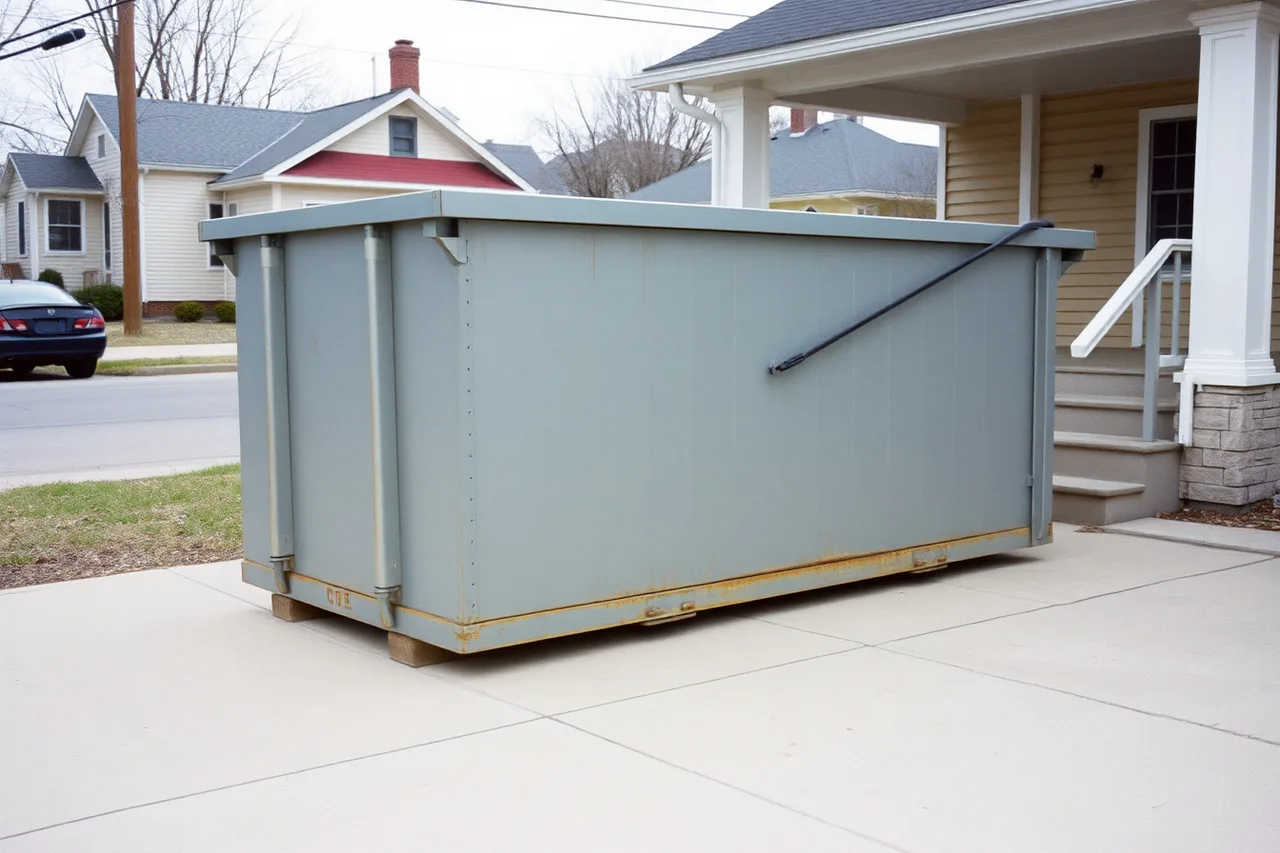
Site address and where exactly the container will sit. What the material is. Roughly how much of it. When it is needed and roughly how long for. Who is authorized to approve a change, with a phone number.
That last line saves more jobs than anything else in the document. A driver who arrives to a locked gate needs a name, not a company.
Then add one sentence that does a great deal of work: this quote is based on the description above, and a material difference on site may change it. That sentence is the difference between a re-price and a dispute.
Block two: the price and what it includes
State the price and then state, in the same block, exactly what it covers.
Delivery of a container of stated size to the stated address. A rental period of P days. An included weight allowance of A, expressed in the same units your facility bills you in. One pull and disposal of the included weight. Any surface protection you provide as standard.
In most markets, a 10-yard container rents for about $250 to $450 a week. A 20-yard runs $350 to $600, a 30-yard $450 to $750, and a 40-yard $600 to $900. Those are typical ranges as of 2026, not quotes.
Included weight typically runs 1 to 2 tons on a 10-yard, 2 to 3 tons on a 20-yard, and 3 to 5 tons on a 30-yard. Overage is billed by the ton, usually $45 to $95, measured on the facility weigh ticket. Extra days cost $10 to $25 each.
What moves those numbers: local tipping fees at the landfill or transfer station, haul distance, container size, included tonnage, rental days, and whether the box sits on private property or in the street. A street permit in many cities runs $20 to $100 for the placement window.
Named providers price inside those bands, by ZIP code.
- Waste Management sells the Bagster, a 3-cubic-yard bag that retails for about $30 at home improvement stores. Collection is booked separately and typically bills at $150 to $250.
- Home Depot and Lowe's both stock the bag in stores, and collection is booked through Waste Management.
- Republic Services and Waste Connections quote roll-off containers by service address, so the bands above move with local disposal fees and haul distance.
- Casella Waste Systems covers Northeast markets. Rubicon sells mostly to commercial accounts.
- Budget Dumpster and Dumpsters.com are brokers rather than haulers, and their phone and web quotes for a 10-yard often start near $250 in many markets.
Two rules make this block work. Use the customer's language for the size, because cubic yards mean little to most people and wall height and door width mean a lot. And express the allowance in the units on the weigh ticket, so that the ticket and the quote can be compared without translation.
Where labor cost is one of your inputs, the Bureau of Labor Statistics publishes wage estimates by occupation and area.
That is a starting point for the number, not a substitute for your own burden and overhead. The full derivation is worked through in the pricing and profit guide.
Block three: the exclusions
Short, plain, and above the signature rather than on the back.
What the exclusions must name
- Materials not accepted in this container
- What happens if excluded material is found
- Weight above the allowance and its rate
- Days beyond the rental period and their rate
- Failed trip, blocked placement, off-schedule pull
Materials not accepted in this container, listed in words a homeowner will understand. What happens if excluded material is found: the load may be refused at the facility, and the cost of dealing with that falls where the terms say.
Weight above the allowance, and the rate that applies to it. Days beyond the rental period, and the rate for those. Any charge for a failed trip, a blocked placement, or a pull requested outside the schedule.
Dense loads are the usual reason a load gets refused or re-priced. Concrete, dirt, shingles and tile reach a weight limit long before they fill a container.
At $45 to $95 a ton, that difference runs to hundreds of dollars on one job.
The exclusion list should come from the facility you use and from your state environmental agency, not from a template, because acceptance rules differ. Establishing that list is a separate exercise and it is worth doing before your first quote rather than after your first refusal.
Block four: the terms that protect the turn
Three clauses, and each one exists because a specific expensive thing happens without it.
Three clauses that protect the turn
- Who calls for the pull, and by when
- What happens at the end of the rental period
- Placement and surface protection
Who calls for the pull, and by when. Without this, containers sit full for days and your steel earns nothing. Name a method and a deadline.
What happens at the end of the rental period. Say whether it continues automatically at a stated daily rate or whether you collect. Ambiguity here always resolves in favor of the container staying longer.
Placement and surface. Say where the container will sit, that the customer confirms it is suitable, what protection you will lay, and that heavy loaded equipment can mark or damage a surface.
That is not a disclaimer that gets you out of a claim. It is a conversation that prevents one. What to carry for it is in the equipment and setup guide.
Put a number on each clause. Extensions typically run $10 to $25 a day, and a failed or blocked trip is commonly billed at $75 to $150.
Worked example: the same job quoted two ways
Take a single renovation job with a mixed load and an uncertain finish date. The figures below use a 20-yard container, seven days on site and a 3-ton allowance.
Same job, two quotes
Quote one
- Container size
- Stated
- Placement
- Not stated
- Rental period
- One week
- Weight allowance
- Not stated
- Excluded materials
- Not listed
- Pull request
- Unclear
Quote two
- Container size
- Stated
- Placement
- Stated position
- Rental period
- P days, then D per day
- Weight allowance
- A, then R per unit
- Excluded materials
- Listed
- Pull request
- Call by noon, next day
The first quote says: a 20-yard container, price X, for a week. It is short, it reads well, and it leaves three questions unanswered.
The second quote fixes X at $475 for a 20-yard at the stated position, including P, seven days, and A, a 3-ton allowance.
Above 3 tons, the rate R is $85 a ton, measured by the facility weigh ticket, and a copy comes with the invoice. Beyond seven days, the rate D is $15 a day.
Excluded materials are listed. The pull is requested by calling the number above by noon for next-day collection.
Same headline price. Completely different document. In the first, every one of X, P, A, R and D is an assumption somebody will later claim was different. In the second, the only remaining variable is what the customer actually puts in the box.
Roof tear-off shows why the allowance matters. Twenty squares of torn-off asphalt shingles typically weigh 3 to 5 tons. At a 3-ton allowance and $85 a ton, the overage on a $475 base runs $0 to $170.
Now run the second quote through the contribution arithmetic in the article on margins and break-even before you send it, so you know which of those numbers you can move if the customer pushes back and which one you cannot.
Before you send it
Two checks, every time.
Does anything in the quote promise something your advertising does not, or vice versa? Consistency between the two matters.
The Federal Trade Commission's advertising guidance for small businesses sets out the general expectation that conditions attached to a price are clear and that the offer is genuinely available.
And is the quote saved somewhere it can be found in a year?
Quotes, weigh tickets and invoices form one chain of evidence. The Internal Revenue Service describes the records a business is expected to keep supporting income and expenses.
A quote that exists only in a sent-messages folder is not a record.
How the numbers behind a quote are chosen is covered in the method for setting a fair margin, and whether your area supports those numbers at all is a market question addressed in the guide to assessing markets.
Common questions
Should the quote be a single page?
Yes. Everything above fits on one, and a customer who reads the whole document is worth more than one who signs a longer one unread.
Do I need a signature?
You need agreement you can evidence. A signature is cleanest. A written confirmation quoting the price and terms back to you is usually enough for small jobs, provided you keep it.
What if the customer will not accept the weight allowance?
Then the conversation you are having is about which container size fits their material, not about price. Dense material in a large box is the problem the allowance is describing.
Should I show the disposal cost separately?
Either approach works if it is stated clearly. Showing it separately makes rate changes easier to explain later; bundling it makes the quote simpler to compare. What fails is bundling it and then treating a rate change as the customer's problem.
How do I quote a job I have not seen?
By making the description block do the work. Ask about material, access, surface and duration, write the answers into the quote, and state that a material difference changes the price.