Guides
Los Angeles waste diversion rules and dumpster dispatch efficiency
Dumpster rental business operations in Los Angeles must route around CalRecycle diversion rules, banned waste and transfer station permit limits.
What to take away
- Dumpster rental business operations in Los Angeles sit inside California's diversion framework, so dispatch must match each load to a permitted facility.
- CalRecycle sets statewide diversion expectations, including a 50 percent jurisdiction target and SB 1383's 75 percent organics reduction, while the Local Enforcement Agency permits the landfills and transfer stations your trucks use.
- Banned items such as tires, batteries, electronics and yard waste cannot ride in a mixed construction box, which splits loads and adds trips.
- Mixed debris tipping in Los Angeles County often runs $70 to $120 per ton, while green waste runs lower, so a badly routed truck can erase the margin on a rental.
- Routing is a compliance tool, not just logisticsthe right tip floor keeps a load legal and a truck moving.
What Los Angeles waste diversion rules require of dumpster fleets
California treats waste diversion as a statewide obligation, and Los Angeles County enforces it through franchise hauling, transfer station rules and landfill inspections. For a rental fleet, that means the box you deliver is a compliance decision before it is a delivery.
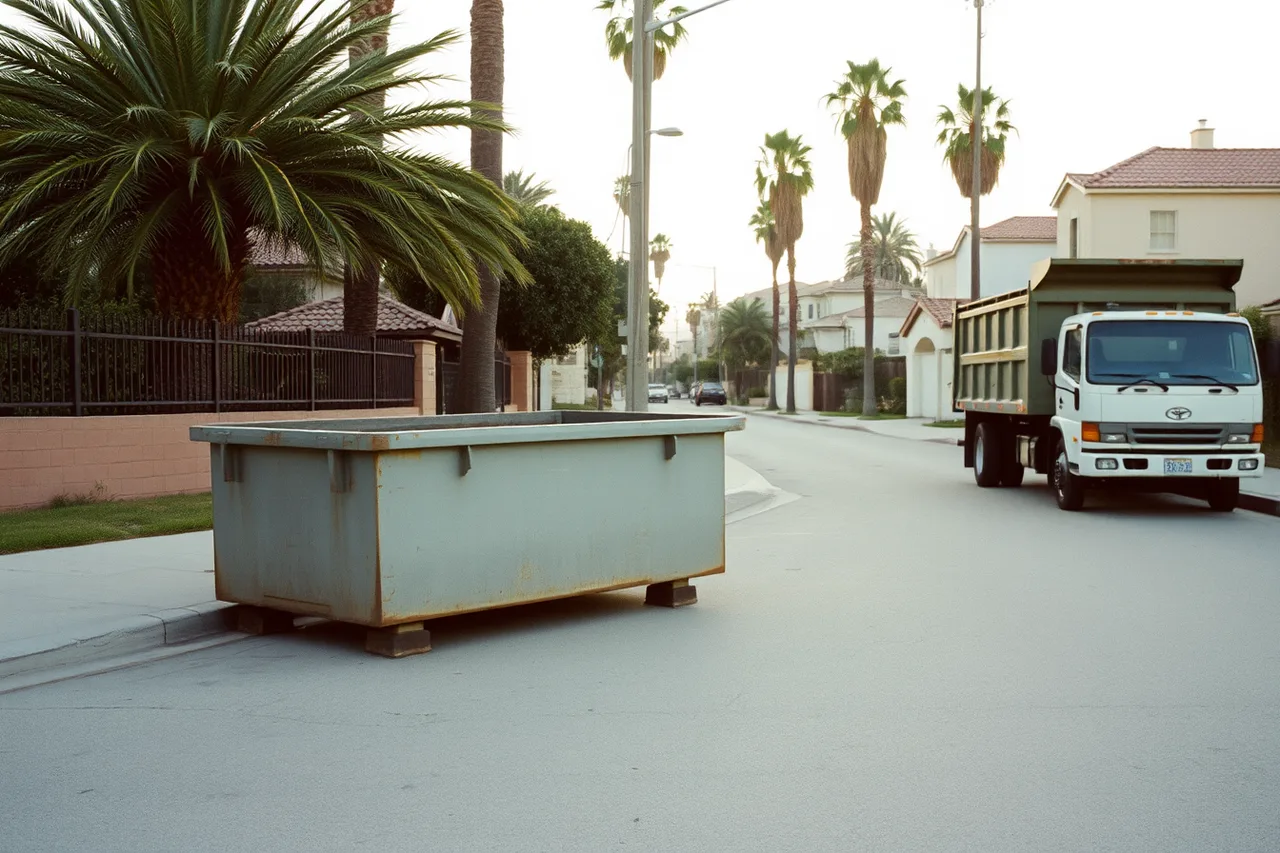
A mixed roll-off dropped at a job site in Boyle Heights or Van Nuys can legally hold only what the receiving facility accepts. If the customer fills it with banned material, the load is rejected or reclassified, and the truck makes a second trip.
Diversion rules also shape paperwork. Regulated haulers and disposal firms in California must track where material goes, which feeds the reports that cities and counties submit upward. Operators who skip that step create exposure for the whole chain.
The practical burden lands on dispatch. Every container needs a destination that matches its contents, and that destination has to be open, permitted and reachable inside the driver's hours. Our licensing and compliance guide covers the registration side of that chain.
Los Angeles adds a density problem. Tight streets, permitted parking and narrow driveways mean dispatch often has fewer placement options than the customer expects.
CalRecycle diversion targets and local enforcement agencies
CalRecycle runs the state's waste reduction framework and publishes the guidance that local governments and haulers build their programs on. Its Local Government Central page is where county and city staff find the diversion reporting and permitting material that flows down to haulers.
California's AB 939 set a 50 percent diversion target for jurisdictions. SB 1383 sets a 75 percent reduction in organic waste disposal by 2025. It also requires separate collection of green waste, food scraps and yard trimmings, so organics need their own routes to composting or anaerobic digestion, not a mixed debris box.
The Local Enforcement Agency is the county or city body that permits and inspects solid waste facilities, including landfills and transfer stations. CalRecycle's Local Enforcement Agency Central explains that role and how LEAs handle permits and inspections.
In Los Angeles County, the LEA function sits with the county health department for many facilities, and its inspections decide whether a tip floor stays open. A facility closure for a permit issue can strand your trucks for a day.
Dispatch should know which transfer stations and landfills in the county are permitted for which waste streams. That single list prevents most rejected loads and the return trips they cause.
CalRecycle also regulates the businesses that handle waste. Its Regulated Businesses pages set out what California expects from waste and recycling firms, which includes the reporting that supports diversion claims.
Wastes banned from the trash and how they change container placement
The state maintains a list of materials that cannot go in the trash, and that list is the biggest single constraint on what a rental container may hold. CalRecycle publishes the Wastes Banned From the Trash page covering items such as batteries, electronics, tires, motor oil, paint, yard waste and treated wood.
For a mixed construction or remodel box, that list means several common job site items are illegal in the container. A homeowner clearing a garage will try to toss paint cans, a car battery and a mattress into the same box.
Placement follows from that. If the customer's project will generate banned items, the container should go where the customer can sort before loading, not where it is easiest to drop.
A driveway spot next to the garage works better than a curbside spot two houses down, because sorting needs proximity. A curbside box on a narrow street invites one-pass loading and a contaminated load.
- Confirm the project type and likely banned items before quoting
- Reserve a placement spot with room to sort, not just room to park
- Give the customer the banned items list in writing at delivery
- Flag mattresses, tires and electronics for separate handling
- Note any yard waste for a green waste route, not the mixed box
- Photograph the load before the truck leaves the site
- Log the tip floor and any rejected material for the file
Some banned items have their own collection channels, and dispatch can route them as separate small jobs. That turns a rejected load into two billable stops instead of a loss.
Dispatch routing under LA County disposal and transfer station rules
LA County disposal and transfer station rules decide where a truck can tip, when, and at what cost. Transfer stations in the county often charge more per ton than a distant landfill but save an hour of drive time, and the trade is rarely obvious without numbers.
Facilities such as Sunshine Canyon Landfill in Sylmar, Calabasas Landfill in Agoura Hills and Puente Hills Materials Recovery Facility in Whittier accept different mixes of municipal solid waste, construction and demolition debris and green waste. Their posted gate rates vary by stream and contract.
Typical LA County ranges are about $70 to $120 per ton for mixed construction debris and about $40 to $70 per ton for green waste, with transfer stations often at the higher end.
Routing has to account for facility hours, scale queues and the permit status of each site. A landfill that takes mixed construction debris may not take a load with green waste mixed in, even if the LEA permits the facility for both streams.
Build routes around waste stream first, geography second. Grouping a green waste box, a mixed debris box and a clean soil box onto one truck saves nothing if the three loads need three different facilities.
Driver hours matter in Los Angeles more than in most markets. Freeway congestion between the San Fernando Valley and the ports can turn a two-stop day into a one-stop day, so the tip floor sequence should follow the traffic pattern, not the map.
Our guide to efficient delivery routes covers the sequencing logic in more detail. The short version: pick the facility, then the order, then the truck.
Track turn times by facility, not by driver. A transfer station with a long scale queue can be slower than a landfill twenty minutes farther out, and only your own logs will show it.
Disposal cost effects of diversion on rental margins
Disposal is the largest variable cost in a roll-off rental, and in Los Angeles County mixed debris tipping of $70 to $120 per ton can decide whether a job is worth taking. Diversion rules raise it further by forcing separation and, sometimes, a second trip.
A contaminated load costs twice. The facility rejects it or reclassifies it at a higher rate, and the truck still burns fuel and hours getting there. That cost lands on the operator unless the contract passes it through.
| Cost driver | Effect on the rental |
|---|---|
| Mixed construction debris tipping | Baseline disposal cost per ton |
| Rejected or reclassified load | Second trip plus higher rate |
| Green waste separated | Lower tipping rate, extra route stop |
| Clean soil or concrete | Low tipping rate, needs its own box |
| Transfer station versus landfill | Higher per ton, lower drive time |
| Wait time at scale | Labor and fuel with no revenue |
Margins also depend on how you price tonnage allowances. A flat rate with a generous included tonnage looks competitive until a heavy debris load arrives. For example, a 10-ton load at a typical $100 per ton adds $1,000 to the disposal bill.
Our pricing and profit guide walks through allowance structures. The profit margins and break-even points piece handles the fixed-cost side.
Operators who track disposal cost per box, per stream and per facility find the jobs that quietly lose money. That is a KPIs owners should track monthly exercise, and it usually changes the rate card within a quarter.
Container placement strategies that keep diversion compliance
Placement is where diversion compliance is won or lost. A container in the right spot gets sorted material; a container in the wrong spot gets whatever fits.
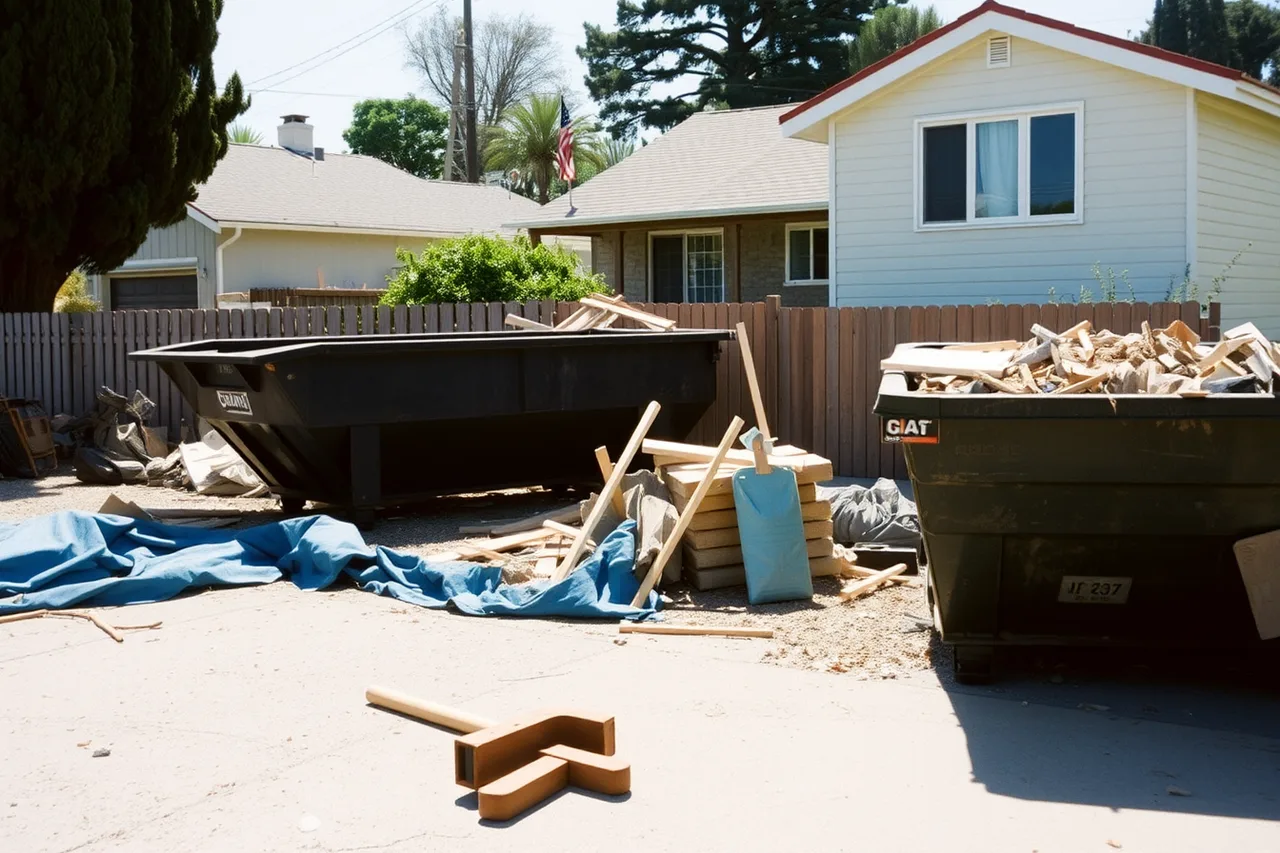
Start with access. In Los Angeles, a ten-yard box on a residential street may need a permit, and the permitted spot may be far from the debris. Walk the site or check satellite imagery before promising a location.
Then match the box to the stream. If the project generates concrete, green waste and household debris, three small boxes beat one large mixed box, because each goes to a facility that accepts it at the right rate.
Give the customer a sorting zone. A tarp, a few labeled bins or simply a marked area beside the container cuts contamination more than any warning sticker.
Sequence the swaps. A box that leaves half full wastes a trip; a box that sits too long invites illegal dumping. Dispatch should schedule the swap by fill estimate, not by calendar.
Keep a facility map current. Permits change, transfer stations close for repairs and tipping rates move. A quarterly review of the sites your trucks use keeps routes and placement decisions honest.