Guides
Dumpster rental daily operations: a photo and records checklist
A daily operations checklist for dumpster rental drivers: the photographs, container numbers and weigh tickets each drop, swap and pull must leave behind.
What to take away
- Every physical move ends in evidencea photograph, a container number and a record entry, made at the time and not remembered later.
- The two photographs used most in disputes are the ground before placement and the ground after the lift.
- A drop fails on placement, a swap fails on records and a pull fails on evidence, so each move gets its own list.
- The sheet is meant to be printed, carried in the cab and marked. A procedure that lives on a server is a procedure nobody follows at seven in the morning.
- Adapt the wording to your own operation. Do not adapt the refusal points.
What each move must leave in the file
Each of the three moves has one job beyond the physical work: leaving evidence. A photograph taken at the site settles an argument that a memory cannot, and it exists only if it is captured at the time. The table lists what each move should leave behind.
| Move | Photographs | Record entry | What it settles |
|---|---|---|---|
| Drop | The placement area before the container touches it; the placed container from two angles, number visible | Container number matched to the job record | A surface-damage claim |
| Swap | The loaded container from two angles, number visible, before it moves | Both container numbers against the job, made at the site | A broken container record, or a surprise at the gate |
| Pull | The container in place, loaded; the ground after the lift | Weigh ticket photographed, weight recorded against this job rather than the day | A driveway argument |
| Return | Anything found on the empty container: rails, floor, door, latches, number paint | Marked available, or out of service with a reason | Whether the unit is fit to go out again |
These three moves are one stretch of the loop described in the operations and workflow guide. One list averaged across all three would catch none of the failures well, so each move has its own sequence.
The drop: record the ground before the box touches it
A drop leaves two pieces of evidence: the placement area before the container touches it, and the placed container afterwards. Both are taken in a fixed order, because the claim that follows a bad placement is usually about the thing the container was set on.
- Confirm the job before leaving the yardaddress, container size, exact placement, access notes, and the name and number of whoever can approve a change.
- Confirm the container number you are taking and that it matches the job record.
- On arrival, walk the placement before backing in. Look for the slope, the surface, overhead wires and branches, and anything parked where the container needs to go.
- Lay protection under the rails and wheels on any paved or finished surface. Do this before positioning, not after.
- Photograph the placement area before the container touches it, including the surface, the approach and anything already damaged.
- Set the container square and level, positioned so the door can open fully.
- Photograph the placed container from two angles, with the number visible.
- Walk the customer through the prohibited materials list and point at the placard on the container. Hand over a copy.
- Restate the fill line, the rental period, the weight allowance and the pull arrangement. Get a yes on all four.
- Confirm who calls for the pull and by when, and leave the number.
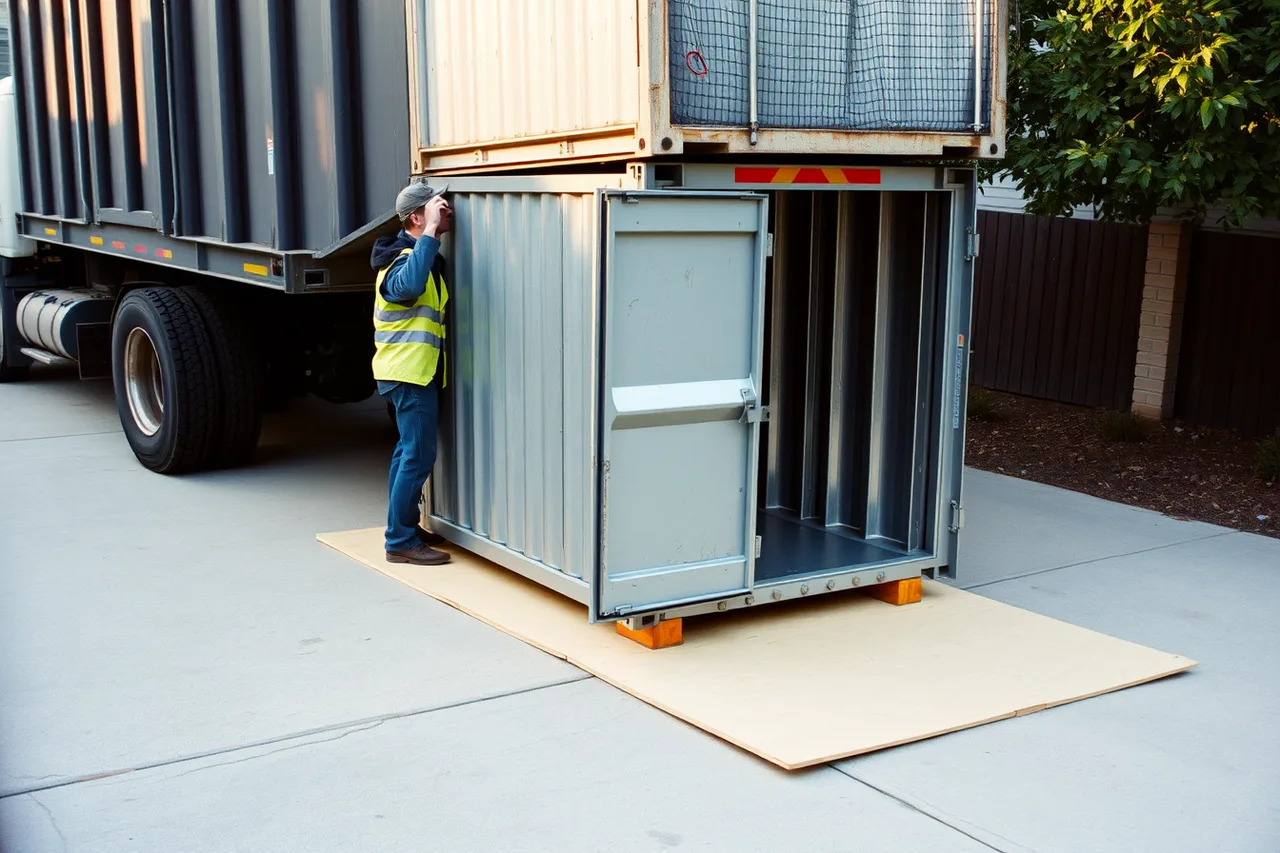
Refusal point. If the surface will not take a loaded container, or the placement is blocked, the container does not come off the truck. Call the office and the customer contact before making a decision at the curb. A container placed somewhere unsuitable becomes a damage claim, and the damage is usually to the thing you set it on.
The swap: where records break
The swap is the move most likely to be rushed and the one where records break. Its evidence is the loaded container photographed before it moves, and both container numbers written against the job while the driver is still at the site.

- Confirm which container is coming out and which is going in, by number, before leaving the yard.
- On arrival, look at the loaded container before touching itfill level against the rails, anything protruding, and anything visible from the prohibited list.
- Photograph the loaded container from two angles, with the number visible, before it moves.
- Secure and cover the load before leaving the property, including on a short move.
- Place the replacement container using the drop procedure above, protection included.
- Record both container numbers against the job, at the site, not later.
- Note anything on the load that will matter at the gate, so the office is not hearing about it from the facility.
Refusal point. If material on the prohibited list is visible in the container, the load does not go to the facility until it has been dealt with. A refused load at the gate costs a container, a driver's afternoon and a difficult conversation. Catching it in the driveway costs a phone call. The list has to come from your disposal facility and your state environmental agency, because acceptance rules differ.
The pull: the photograph that settles the argument
A pull leaves the strongest evidence in the file, because it is the last time anyone sees the property. The ground photograph taken after the lift is the picture that settles a driveway argument, and it exists only if it is taken at the time.
- Confirm the pull is expected and that access will be available. Confirm the same day where the job is gated or occupied.
- On arrival, inspect the load for fill level, protrusions and prohibited material.
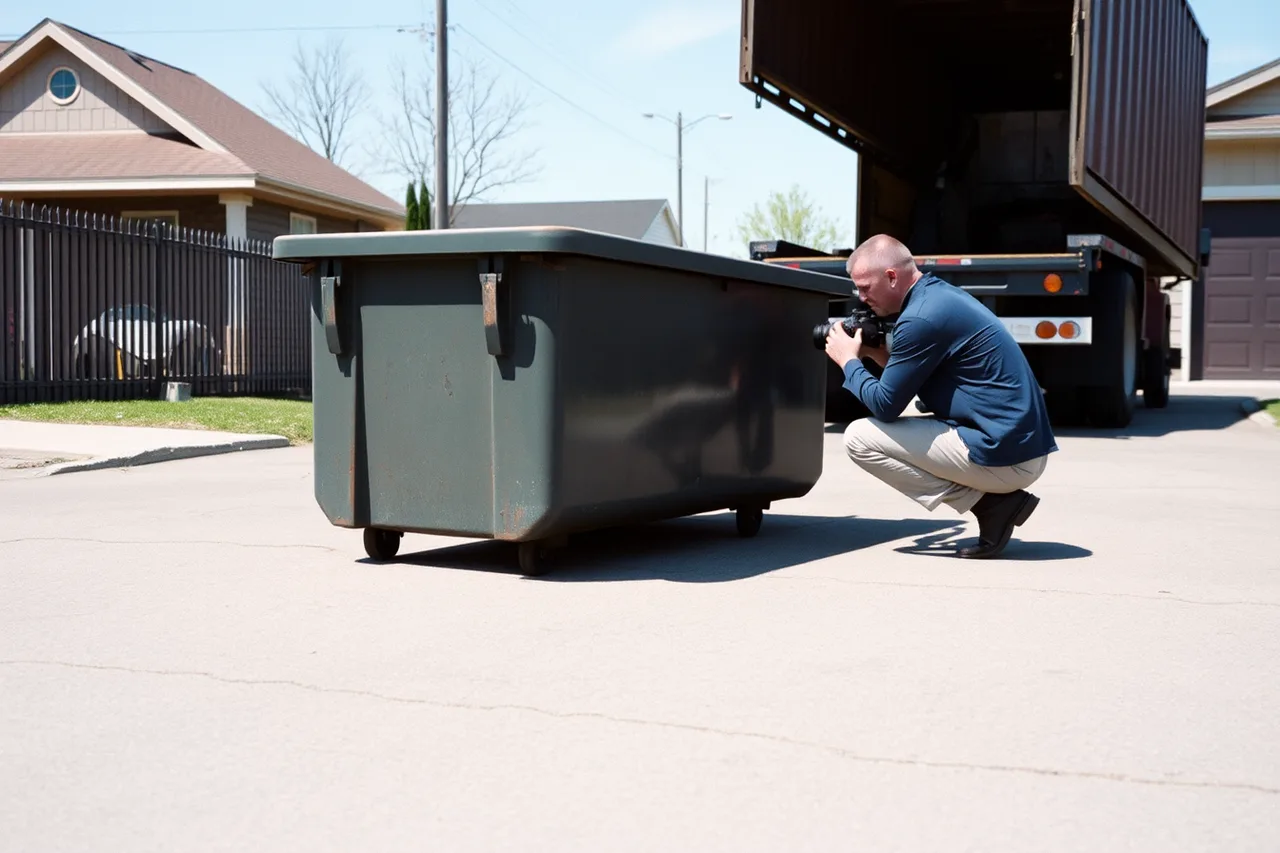
- Photograph the container in place, loaded, with the number visible.
- Photograph the ground after the container is lifted.
- Secure and cover before leaving the property.
- Collect and photograph the weigh ticket at the facility, and record the weight against this job rather than against the day.
- On return, inspect the empty containerrails, floor, door, latches, and the paint on the number. Anything found goes into the record with a photograph.
- Mark the container available, or out of service with a reason.
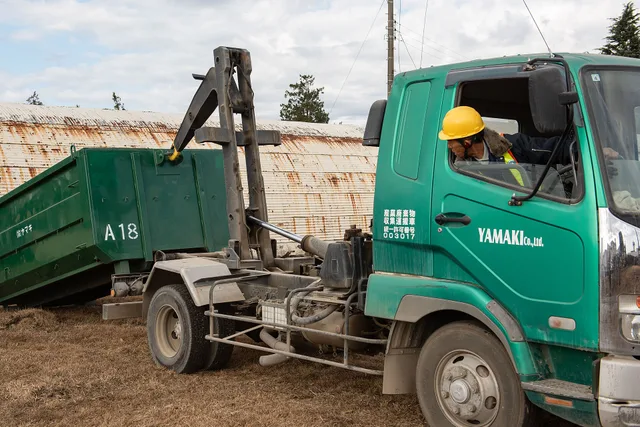
Refusal point. No container leaves a property unsecured or uncovered, even for a short move. This is the item drivers skip when they are behind, which is precisely when it matters. The federal rules include specific securement requirements for roll-on/roll-off and hook lift containers, and which apply to your vehicle and operation is a question for your state. Settle it once and make it part of the pre-trip habit.
Who signs the return inspection, and what happens to a finding afterwards, is covered in the article on preventive maintenance records.
The end of the day, in the yard
- Photographs and weigh tickets attached to their jobs, not left on a phone.
- Container numbers reconciled against the moves actually made.
- Anything found damaged entered with a reason and a date.
- Any refused load, blocked placement or failed trip written up the same day, briefly, in writing.
- Tomorrow's access notes read before anyone leaves.
- Yard left with a clear lane, and nothing parked where the first truck out has to move it.
The yard is also where a machine and a person share ground. OSHA's powered industrial truck standard says each operator must be competent to operate the truck safely, shown through training and evaluation. A one-line rule about who moves when belongs on this sheet, not in a separate document.
When the sheet and the day disagree
A written move procedure is only useful if somebody deals with the times it does not fit. Collect the moments a driver had to work around it.
A placement the sheet did not anticipate, a customer who could not be reached at the booked number, a facility that closed earlier than the note said: each is a defect in the document, not in the driver. Treating it that way keeps drivers reporting them.
Then amend the sheet on the strength of the event, put the date on it, and say in one line which job caused the change.
A procedure that only ever grows is one that stops being read, so the same review should be willing to delete a step that has never once caught anything. The refusal points stay out of that review: adapt the wording, not the lines.
The calendar side of these moves is covered in the article on scheduling bookings. What the driver carries comes from the decisions in the equipment and setup guide. Training and staffing belong in your written plan, not discovered on a busy week.
Common questions
Why separate procedures instead of one daily list?
Because the three moves fail differently. A drop fails on placement, a swap fails on records, a pull fails on evidence. One list averaged across all three catches none of them well.
Does this slow a driver down?
The first week, yes. After that the photographs and the number confirmation take seconds and remove the phone calls that used to follow a job around for days.
Which photographs actually get used later?
The ground before placement and the ground after the lift. Those two settle the surface-damage argument, which is the dispute this trade has most often on residential work.
Should the same procedure apply to a container going to a repeat contractor?
The refusal points, yes. The placement conversation can be shorter with somebody who has run the same site for months, and the photographs still get taken.