Guides
The dumpster rental equipment brands owners buy twice in 2027
Roll-off container builders operators repurchase, what each is known for, and how hoist fit, parts lead time and resale decide the second order.
What to take away
- The dumpster rental equipment brands owners buy twice are the ones with a dealer or parts channel near the yard, not the ones with the best brochure.
- Galbreath, Wastequip, Bobcat, Dragon Products and Holt all sell into this trade, and each suits a different operator. American Rolloff, J&J Truck Bodies & Trailers and Marathon Equipment round out the list.
- Fit beats reputation. A container that is not built to your hoist's stated maximum is a return trip with a trailer.
- Ask for the empty weight in pounds. Every pound of container is a pound of payload you cannot sell.
- Parts lead time on a door, a rail section and a latch set decides whether a box earns in year three.
The builders operators actually repurchase
Every name below sells containers into the waste trade in the United States. Lead time and freight are quoted locally, not published, so confirm the dealer list for each builder before you shortlist.
Galbreath of Winamac, Indiana, builds roll-off containers, hoists and compactors, and has been part of the Wastequip group since 2006. One supplier for the box and the hoist that lifts it removes the fit argument. Units are quoted through a dealer network, so freight and lead time come from the local branch.
Wastequip, based in Charlotte, North Carolina, is the largest North American manufacturer in this category and owns Galbreath and other container brands. It fits fleets that want standard sizing across several yards and a national parts channel. Pricing is dealer-quoted.
Bobcat, the Doosan Bobcat line out of West Fargo, North Dakota, sells roll-off containers and hoists beside its compact loaders and excavators. Operators already running Bobcat iron get one dealer for machines and boxes. Pricing is dealer-quoted.
Dragon Products of Beaumont, Texas, builds heavy-duty roll-off containers and trailers for oilfield, construction and demolition work. The build fits operators hauling dirt, concrete and demolition debris, where abrasion is the normal load. Pricing is quoted per build.
Holt builds roll-off containers and trailers for construction and scrap haulers, and quotes non-catalog lengths and hook bars rather than catalog sizes. That suits an operator who needs a specific dimension on the first order. Pricing is per build.
American Rolloff builds containers and roll-off trailers, including hook-lift compatible units. Mixed hoist and hook-lift fleets fit here, where one yard feeds both types. Pricing is quoted per unit.
J&J Truck Bodies & Trailers of Somerset, Pennsylvania, builds roll-off trailers, dump bodies and containers. It suits operators who want the trailer and the box from one shop. Pricing is quoted per build.
Marathon Equipment of Vernon, Alabama, builds compactors, balers and roll-off containers. It fits operators who pair a compactor with containers at a transfer point or a retail account. Pricing is quoted per unit.
Availability is regional. A builder with a strong name and no dealer within a day of your yard is a worse choice than a competent one nearby.
Confirm the current dealer list with each manufacturer before you shortlist, and ask which brands the local branch keeps parts for.
What separates two competent builders
Steel thickness in the floor and the walls is the first number to ask for, in gauge or in inches, not as heavy duty. The second is how the floor and side sheets are joined, continuous or intermittent, because that seam fails first under abrasive loads.
Empty weight is the third number, and every builder above publishes it per unit. It sets how much legal payload is left after the box.
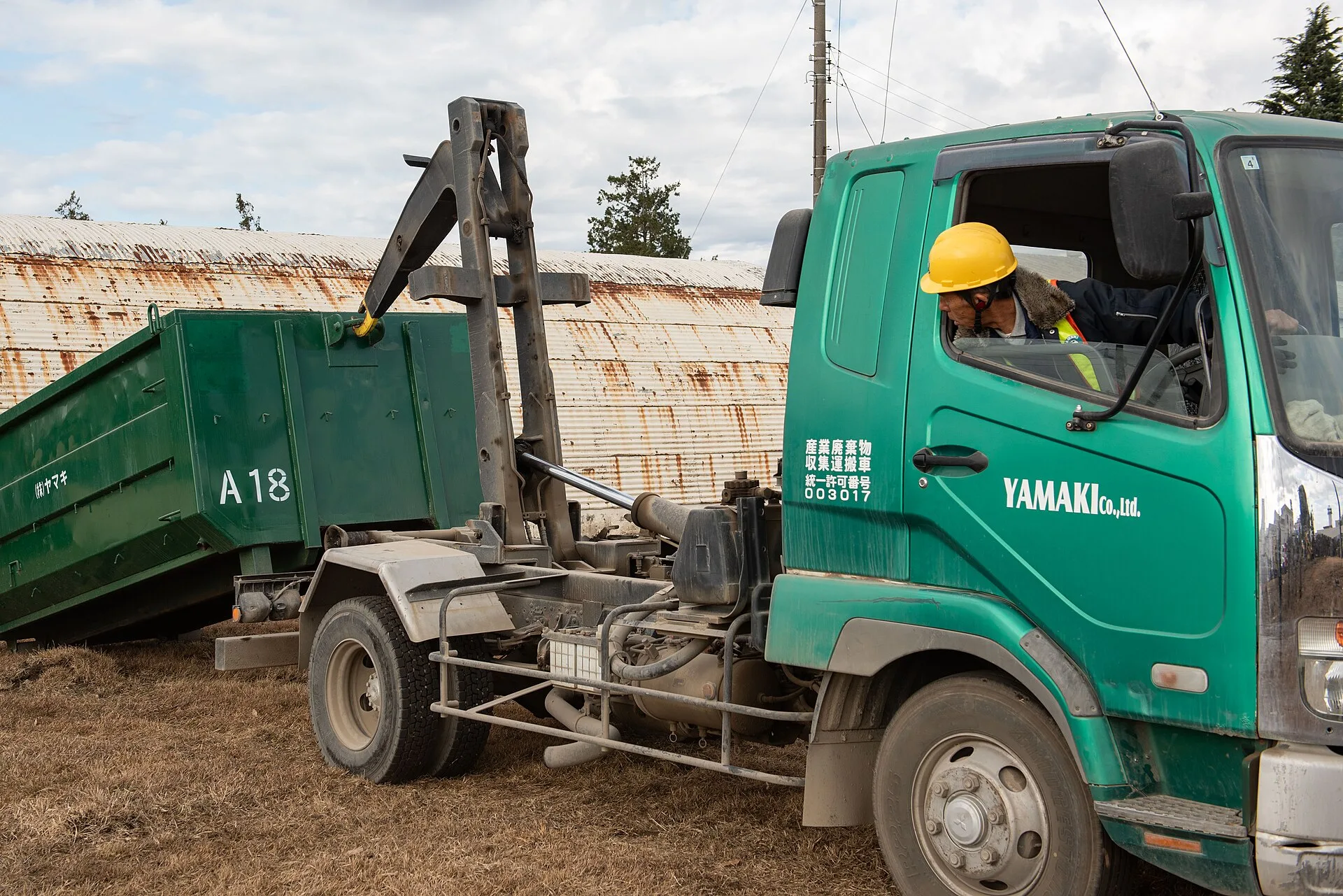
Hook bar dimensions and height matter on a hook-lift build, and they are checked against a standard, not against opinion. Overall length is checked against your hoist manufacturer's stated maximum. Nominal cubic yards will not answer that question.
Parts lead time decides year three. Ask today for a quoted lead time on a replacement door, a rail section and a set of latches. The cadence for keeping that steel road-ready is set in the preventive maintenance checklist.
Where the second purchase is decided
The purchase is a day. The dealer relationship is the next decade.
A dealer who answers the phone when a door bends on a Friday is worth a premium over a lower price from somebody who ships and disappears. Test it before you buy: call with a technical question you already know the answer to, and time the reply.
Ask what the dealer will take in trade and on what basis. That number shapes what your fleet is worth when you change direction. Whether a used unit is the better buy is worked through in the new against used cost comparison, which runs the arithmetic on cost per turn rather than on purchase price.
Matching the box to the work
Best fit
- Galbreath
- One supplier for box and hoist
- Wastequip
- Multi-yard fleets wanting standard sizing
- Bobcat
- Operators already running Bobcat iron
- Dragon Products
- Dirt, concrete, demolition debris
- Holt
- Non-catalog lengths and hook bars
- American Rolloff
- Mixed hoist and hook-lift fleets
- J&J Truck Bodies & Trailers
- Trailer and container from one shop
- Marathon Equipment
- Compactors and containers in one purchase
Watch
- Galbreath
- Dealer coverage in your metro
- Wastequip
- Which brand within the group you are quoted
- Bobcat
- Container line depth at your dealer
- Dragon Products
- Weight of the build against your payload
- Holt
- Lead time on a custom build
- American Rolloff
- Hook bar standard on each unit
- J&J Truck Bodies & Trailers
- Lead time on a trailer build
- Marathon Equipment
- Container spec when a compactor is in the deal
Fill this in for each candidate and the choice is usually obvious within an hour. Where it is not, the tie-breaker is a call to an operator who has run that builder's boxes for three years. A specification sheet cannot tell you what a bent door costs in lost turns.
The parts that are not the builder's problem
Two things sit outside the specification sheet and cause more trouble than any brand choice.
The first is how the loaded container is secured on the vehicle. The Federal Motor Carrier Safety Administration sets out its cargo securement requirements, including provisions covering roll-on, roll-off and hook-lift containers.
Which rules apply to your vehicle and operation is a question for that agency and your state, not for whoever sold you the box.
The second is your own yard, where machines move steel around people on foot. OSHA's forklift and powered industrial truck hazards covers operator competence, inspection and pedestrian risk. Its workplace safety and health program guidance describes a small employer's version.
Neither is a brand question, and both cost more when ignored than any specification difference between two competent builders. For the full set of equipment decisions in order, including how the truck constrains everything else, work through the equipment and setup guide.
What a first operator needs to own before opening is in the equipment checklist for new owners. Whether an area supports your planned fleet is a market question covered in the guide to assessing markets.
Common questions
Should I buy all my containers from one builder?
There is a real argument for it: interchangeable parts, one warranty conversation, one freight arrangement. The counter-argument is what happens when that builder's lead times stretch. Most operators end up with a primary and a secondary.
How much does brand matter compared with condition on a used unit?
Less than you would expect. A well-built container that has hauled concrete for eight years can be in worse condition than a modest one that carried furniture. Inspect the floor seam and the rails first.
What if a dealer will not state a wall gauge or a parts lead time?
Treat the refusal as the answer. These are ordinary facts that any builder holds, and reluctance to put them in writing usually means the number is unflattering.
Does a longer warranty mean a better container?
Only if you have read what it covers and what voids it. A long warranty with an exclusion for abrasive loads is not a warranty for this trade. Ask for the document, not a summary.