Guides
How to start dumpster rental business: 5 stages
How to start dumpster rental business in five stages: disposal first, then street placement, truck and steel, rental terms, and one customer type.
What to take away
- Order matters more than speed. Each stage below produces a fact that the next stage depends on, and doing them out of sequence is how owners end up with equipment they cannot use.
- Every stage ends with a gatesomething you must be able to state plainly before spending money on the next one.
- The whole sequence can be worked without owning anything. Most of it is phone calls and driving.
Stage one: settle disposal before anything else
Opening a dumpster rental business starts here, because you cannot quote a job until you know where the material goes and what it costs to leave it there.
Disposal facility questions
- Charge by weight
- Minimum charge
- Separate material fees
- Refused materials list
- Refused load procedure
- Account vs cash customer
- Round-trip time
- List every transfer station and landfill within a plausible drive of the area you want to serve.
- Call each one and ask four questionswhat it charges by weight, whether there is a minimum charge, which materials carry a separate fee, and what it refuses outright.
- Ask what happens when a container arrives carrying something on the refused list, because that answer is your worst case and it belongs in your terms.
- Ask whether an account customer is treated differently from a cash customer, and what opening an account requires.
- Drive to the one you would actually use, on a weekday morning, and time the round trip including the queue.
Gate: you can state the round-trip time to your primary facility from memory, and you have a written list of what it will not accept. Without both, every price you quote is a guess.
Anything regulated sits above the facility's own rules. The state environmental agency is the authority on how particular materials must be handled and on any hauler registration the state requires. At the federal level, the Environmental Protection Agency administers the Resource Conservation and Recovery Act, the law that frames how solid and hazardous waste is handled; the facility is the authority on what it will take through its own gate. Ask each, in order, and keep the answers on one page.
Stage two: prove the placement question in your own towns
A container on private ground and a container on a public street are different products with different lead times.
Street placement permit questions
- How to place in roadway
- Approval time
- Fee amount
- Required markings or lighting
Call the permit office in each town you plan to serve. Ask how to place a container in the roadway, how long approval takes, the fee, and the required markings or lighting.
Rules vary from one municipality to the next. What works in your county seat tells you nothing about the town next door.
Work out your own driveway policy. A loaded container concentrates a great deal of weight on a small footprint, and a driveway that cracks under it becomes an argument you will usually lose.
Plywood under the rails and wheels is the standard prevention, and the decision to insist on it belongs to you, not the customer.
Gate: for your top two towns you can say what a street placement requires and roughly how long it takes, and you have written down what you will and will not put a container on.
Stage three: buy the truck, then the steel
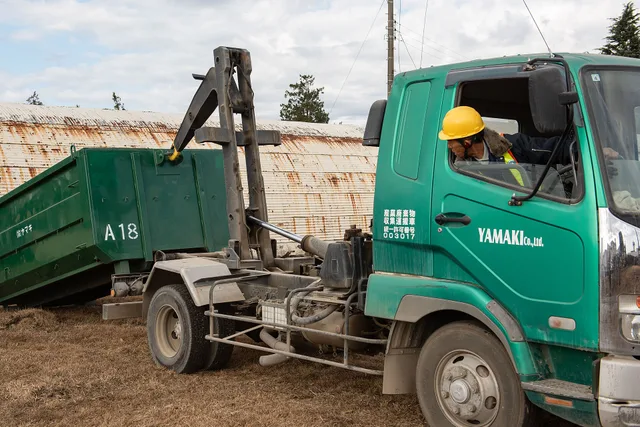
The truck constrains what containers you can carry. Buying containers first and a truck second is how owners discover their hoist and their boxes do not match.
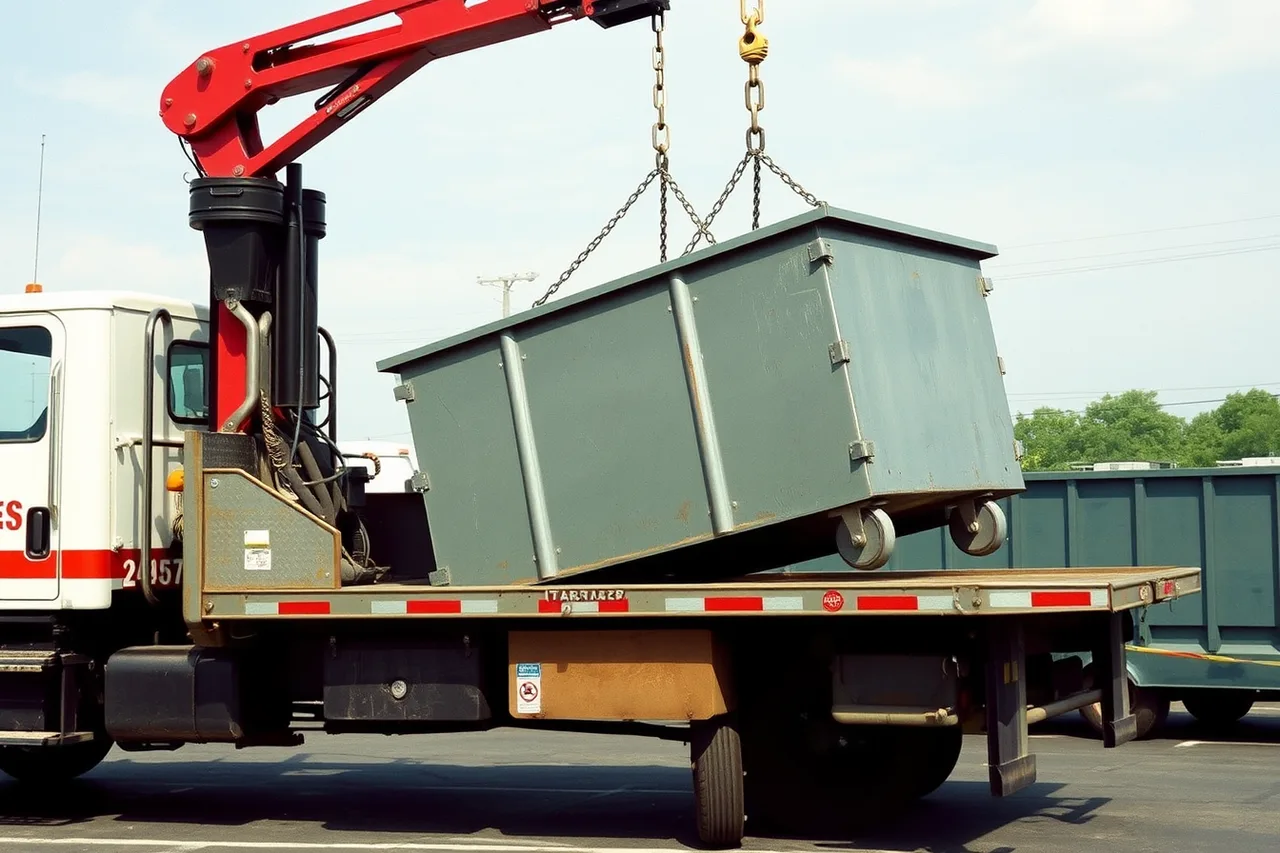
Which hoist system, which sizes and what condition to accept are decisions with real trade-offs, and the equipment and setup guide works through them.
Before you sign for a vehicle, read what the Federal Motor Carrier Safety Administration requires under 49 CFR Part 393, the cargo securement rules, which include provisions written for roll-on, roll-off and hook-lift containers. If you haul across state lines, you must register with the FMCSA and obtain a USDOT number; intrastate-only operators should confirm their state's equivalent registration. Applicability depends on your vehicle and your operation, and that is a question for the agency and your state, not for a seller.
Registration, tax setup and the licenses this work needs run alongside the purchase rather than after it. Form your business entity—most operators choose an LLC to separate personal and commercial liability—obtain an Employer Identification Number from the Internal Revenue Service, and file the state and municipal registrations the hauling trade requires. The IRS explains the elections and obligations involved in starting a business, and the authorities specific to hauling and waste are mapped in the licensing and compliance guide.
Insurance is not optional in this trade. Before the first load moves you need commercial auto liability on the truck, general liability covering the container sitting on a customer's property, and cargo coverage for the material in transit. If you haul anything beyond ordinary solid waste, pollution liability is a separate policy your broker will price differently. Bring the facility's accepted-materials list to the broker so the pollution question is answered in writing, not assumed.
Gate: the truck is matched to the containers, and you can name every body that has told you what it requires of you.
Stage four: write the terms that protect turn time
A container that sits full on a job for an extra week is a container that earned nothing that week. This is the failure new operators do not see coming, because it looks like a happy customer.
Four rental terms clauses
- Rental period and overage
- Who calls for pull
- Included weight and overage
- Excluded materials in plain words
Four clauses do most of the work. What the rental period actually is, and what happens when it passes. Who calls for the pull and by when. What weight the quoted price includes and what happens above it. What materials are excluded, in plain words a homeowner will understand.
Write them before your first job. Adding them later, to a customer who has already had a different deal, is a conversation nobody wins.
Stage five: sell one job type well
New operators try to serve every caller. That fragments the fleet, because a mixed book needs more sizes than a focused one. It also fragments your learning, because you never see the same job twice.
Pick one job type
Renovation contractors
- Sizes
- Mixed
- Density
- Heavy
- Rhythm
- Project
- Objections
- Cost
Roofers
- Sizes
- Low
- Density
- Light
- Rhythm
- Fast
- Objections
- Placement
Household cleanouts
- Sizes
- Medium
- Density
- Medium
- Rhythm
- One-off
- Objections
- Weight
Property managers
- Sizes
- Mixed
- Density
- Varies
- Rhythm
- Recurring
- Objections
- Turn time
Pick one: renovation contractors, roofers, household cleanouts, or property managers. Learn that job's sizes, its typical density, its rhythm and its objections.
The marketing side of that choice, including which channels a first operator can actually work, is covered in the marketing and growth guide. How the daily loop runs once calls start arriving is in the operations and workflow guide, and the placement and upkeep craft that keeps containers in service is in the delivery and maintenance guide.
Gate: you can describe your intended customer in one sentence, including what they are trying to get done and what usually goes wrong for them.
The gate at the end of each stage
The gates matter more than the stages. Each one is a statement you either can or cannot make out loud. If you cannot, the honest move is to stay in that stage rather than to spend forward and hope the fact resolves itself.
If you want somebody to test those statements with you before the money moves, the Small Business Administration's free counseling and mentoring services connect owners with local advisers. Bring the disposal answers and the terms draft, because those are the two places a plan usually turns out to be thinner than it felt.
Common questions
How long does this sequence take?
The facility and permit calls take days. Opening a disposal account can take longer if the facility requires credit references or a signed contract. The equipment decision takes as long as the market takes to offer the right vehicle. Owners who compress the first two stages usually pay for it in stage four.
Can I start part time while keeping another job?
The selling and the paperwork, yes. The moves, rarely, because a customer who needs a swap needs it that day and a driver who is elsewhere is not an operation.
Should I use a hired hauler at the start?
It is a reasonable way to test demand without buying a truck. Price it honestly as a cost per move and watch what it does to your margin, because a rate that works for a few jobs a week rarely survives volume.
Is a franchise a shortcut through any of this?
It changes who answers the questions, not whether they need answering. Disposal, placement and terms are still local, and a franchise agreement is a document to have read by somebody who reads them professionally.
What is the first thing to fix once the business is running?
Turn time. It is the number that decides how much revenue your existing steel can produce, and improving it costs less than anything else on the list.