Guides
Ohio dumpster rental business operations in winter
Dumpster rental business operations in Ohio need winter plans for freeze, snow, road salt, equipment maintenance, dispatch timing, and driver safety.
What to take away
- Dumpster rental business operations in Ohio slow when hydraulic fluid thickens and snow blocks access, so winter prep starts in October.
- Road salt corrodes hoist rails, cable sheaves and container floors faster than summer grit, and the damage shows up as cracked welds by February.
- Cold-weather maintenance means switching to winter hydraulic oil, greasing more often and thawing frozen pins before a truck tries to lift.
- Winter hauling schedules need longer windows, fewer stops per route and a plan for roads that freeze before the salt truck arrives.
- Driver safety in ice and snow depends on traction footwear, high-visibility layers and a no-jumping rule that matches federal fall prevention guidance.
How Ohio winter conditions hit dumpster fleets
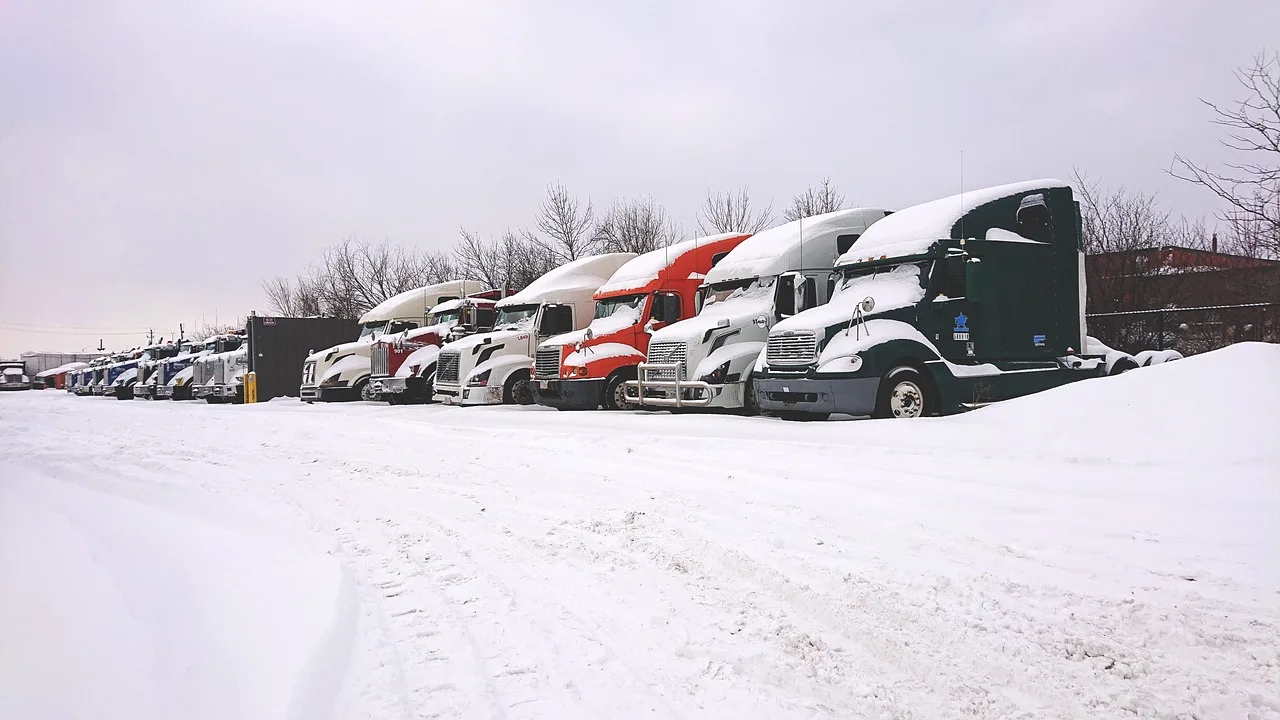
Ohio winters are not Minnesota cold, but they are wet, cloudy and prone to freeze-thaw cycles. A container sitting on a Cleveland curb can collect snow, melt it at midday and refreeze into a solid block of ice by night. That ice adds hundreds of pounds and can weld the lid shut.
Lake-effect snow along the I-90 corridor between Toledo and Ashtabula can drop a foot in a few hours. South of Columbus, ice storms are the bigger problem. Both patterns hit the same fleet, often in the same week.
Dispatch teams feel it first. A truck that normally makes twelve stops may make six. The driver spends the rest of the day chipping ice off a hoist or waiting for a plow. That lost time is covered in our markets for dumpster rental breakdown.
The Ohio Department of Transportation (ODOT) plows and treats state routes during winter weather. Before dispatch, check road conditions through ODOT's OHGO service. Salt spray on treated roads accelerates corrosion on hoist rails, cables and container floors.
Fleets running in Cuyahoga, Franklin and Hamilton counties get three different winters. Cleveland deals with lake snow bands. Columbus gets ice. Cincinnati gets rain that freezes after dark. Route plans built for one county rarely fit the other two.
Freeze, snow and road salt effects on containers and hoists
Water is the enemy. It gets into every seam, hinge and pocket, then expands when it freezes. A quarter inch of water in a container pocket can split a weld.
Winter hazards and damage signs
Winter hazard
- Freeze-thaw water
- Container floors, welds, latch pins
- Snow load
- Container lids, tarps, hoist frames
- Road salt spray
- Hoist rails, cable sheaves, chains
- Ice on rails
- Rollers, tracks, side rails
- Frozen debris
- Container bottoms, dump gates
What it damages
- Freeze-thaw water
- Rust streaks, popped welds
- Snow load
- Bent lid ribs, sagging tarp
- Road salt spray
- White powder, pitting, stiff cable
- Ice on rails
- Container drags, won't seat
- Frozen debris
- Load sticks, gate won't open
Warning sign
- Freeze-thaw water
- Snow load
- Road salt spray
- Ice on rails
- Frozen debris
Freeze, snow and road salt effects
| Winter hazard | What it damages | Warning sign |
|---|---|---|
| Freeze-thaw water | Container floors, welds, latch pins | Rust streaks, popped welds |
| Snow load | Container lids, tarps, hoist frames | Bent lid ribs, sagging tarp |
| Road salt spray | Hoist rails, cable sheaves, chains | White powder, pitting, stiff cable |
| Ice on rails | Rollers, tracks, side rails | Container drags, won't seat |
| Frozen debris | Container bottoms, dump gates | Load sticks, gate won't open |
Road salt damage to hoists and steel is cumulative. A cable that looks fine in November may have internal corrosion by March. Inspect sheaves and cables weekly once salt trucks are running.
Container floors take the worst of it. Salt-laden slush sits in the bottom, and when the load is dumped, the floor flexes. Small cracks open, water gets in, and the next freeze widens them.
Tarps and lids fail in a different way. Wet canvas freezes stiff, then tears at the grommets when a driver pulls it. Frozen lids warp and stop sealing, which lets meltwater into the load and adds weight nobody billed for. Check tarp straps for cracks before every haul.
Cold weather container maintenance starts with a wash. Pressure-wash the hoist rails and container undersides when temperatures allow, then apply a rust-inhibiting coating. Our delivery and maintenance guide covers the full road-ready routine.
Cold-weather maintenance for roll-off containers and hydraulic systems
Hydraulic oil thickens as temperatures drop. Standard ISO 46 oil that flows fine at 70 F can turn sluggish at 10 F, slowing the hoist and straining the pump. Many Ohio fleets switch to ISO 32 or a synthetic blend for winter.
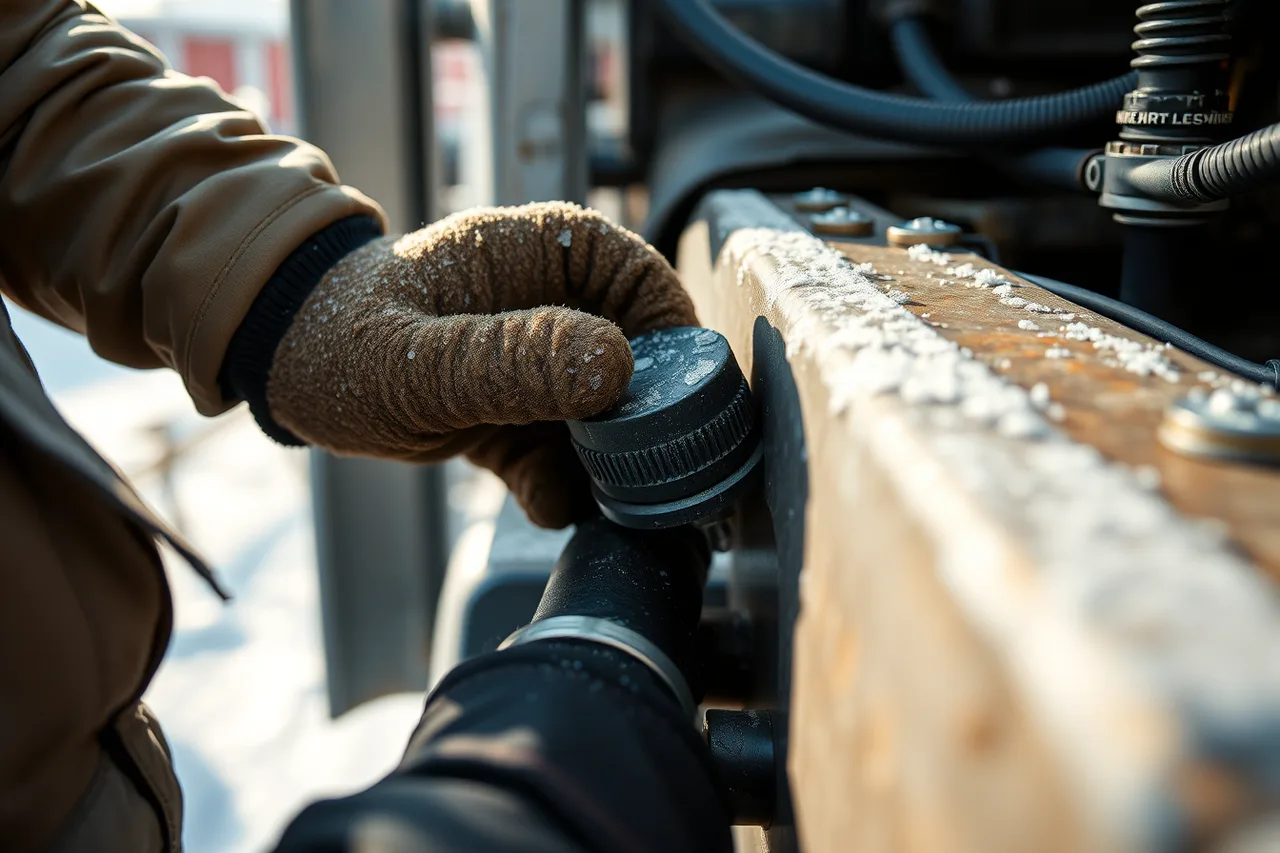
Check the hydraulic filter and reservoir for water. Condensation forms in temperature swings, and water in hydraulic fluid can freeze, block a valve and deadhead the pump. Drain water from the reservoir monthly.
Grease is your friend in cold weather. Lithium grease stiffens, so use a low-temperature grease on pins, rollers and sheaves. Grease more often than in summer, not less.
Batteries lose cranking power in the cold. Test them before the first hard freeze and keep terminals clean. A jump start on a rural route costs more than a new battery.
Fuel needs attention too. Untreated number two diesel can gel below 15 F, and a gelled filter stops a truck cold. Treat fuel at every fill, keep tanks above half, and carry a spare filter through January and February.
Hoist operation in freezing temperatures means slower cycles. Follow the truck and hoist manufacturer's cold-start instructions. If the instructions allow it, warm the truck, cycle the hoist empty to move cold oil, then load. Never force a frozen pin with the hoist.
Follow the preventive maintenance checklist for daily, weekly and monthly tasks. It keeps winter service from becoming emergency service.
Hauling schedules when roads freeze and salt spreads
Winter hauling schedules Ohio fleets run are not summer schedules with a coat on. They are shorter, slower and built around road conditions.
Start with route density. Group stops by neighborhood so a truck spends less time on treated highways and more time on short local hops. Fewer miles on salted roads means less corrosion.
Build in a weather buffer. If a route normally takes six hours, plan eight. A single icy bridge can add thirty minutes.
Use a two-tier dispatch system. Tier one is same-day for emergency calls. Tier two is next-day for routine swaps. Tell customers the tier when they book, so no one waits on a truck that is stuck behind a plow.
Watch the forecast for freeze events, not just snowfall. Black ice forms when the road is wet and the temperature drops fast. Ohio Revised Code § 4511.202 prohibits operating a vehicle without reasonable control, so delay non-urgent hauls when conditions make safe control doubtful.
Plowed snow changes access as much as ice does. A container behind a plowed-in apron is a failed stop, and the driver still burns the fuel. Ask customers to clear a path and to salt their own driveway before the truck arrives.
Keep a salt and sand mix on the truck for your own yard and customer driveways. A bag of traction grit costs less than a tow. The SOP checklist for daily operations shows how to fold weather checks into the morning routine.
Driver safety, PPE and fall prevention in ice and snow
Ice on a hoist rail is a fall hazard. Drivers climb on frames, tarp loads and check containers. One slip can end a career.
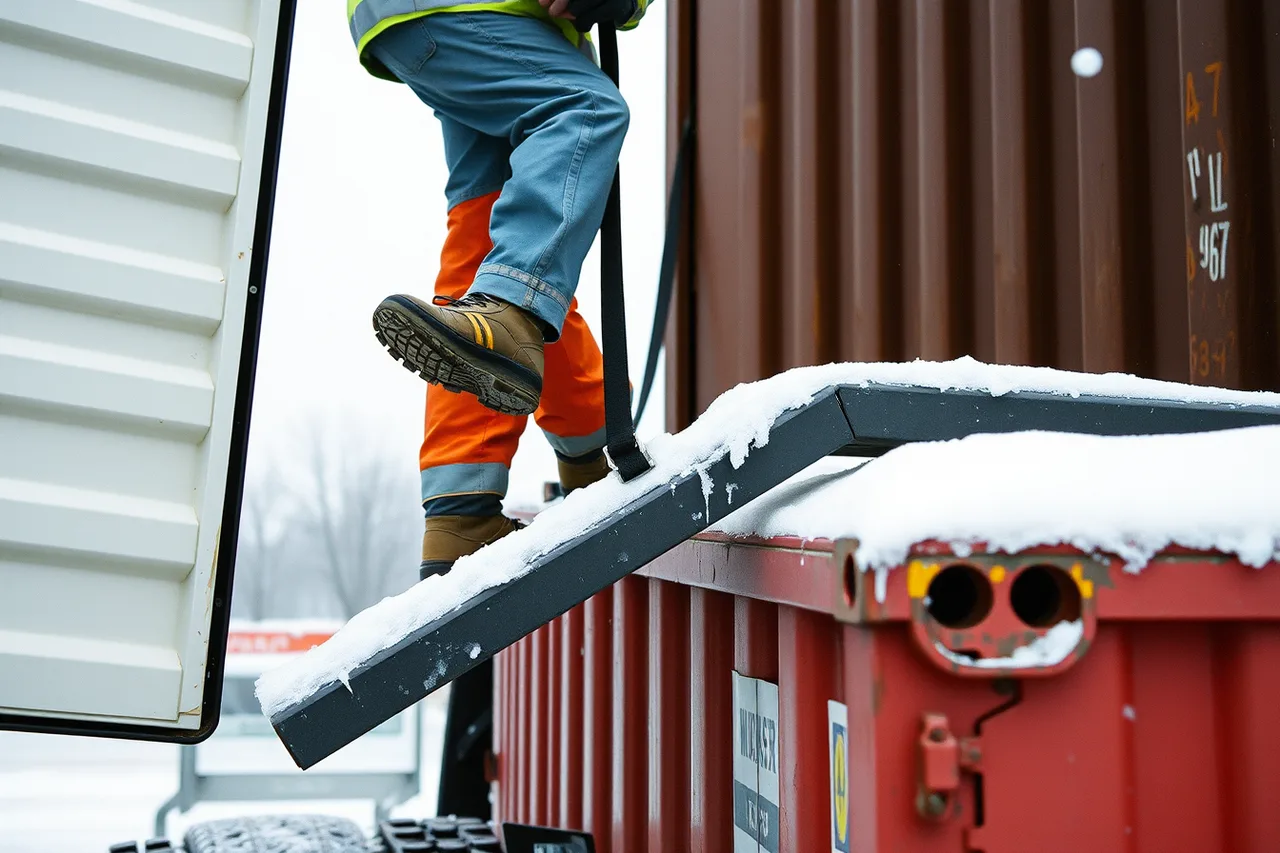
OSHA requires employers to protect workers from recognized hazards, including slips and falls. For work covered by OSHA's general-industry rules, 29 CFR 1910.28 addresses fall protection on walking-working surfaces; applicability depends on the task and work area. The agency's fall prevention campaign explains fall-prevention training and equipment.
OSHA's general-industry PPE requirements include 29 CFR 1910.132 for hazard assessment and PPE, 1910.136 for foot protection, and 1910.138 for hand protection. Employers should assess the specific task and hazards when selecting winter gear.
For winter, that means insulated gloves that still let a driver grip a tarp strap, traction overshoes or cleats, and high-visibility outerwear that fits over layers. Bulky gear can snag, so test it before the season.
Cold also dulls judgment. Shorten outdoor shifts on single-digit days, rotate drivers through warm-up breaks, and keep water available so no one works dehydrated in a heated cab.
Ohio is served by federal OSHA. Employers can contact OSHA's Cleveland Area Office at (216) 615-4266 for compliance questions, consultations and training information, or check OSHA's state office directory for current contact details.
A winter operations checklist for Ohio dumpster companies
Use this checklist before the first freeze and again after every major storm.
- Check ODOT's OHGO road conditions before dispatch, review the forecast for freeze events, and delay non-urgent trips when roads are unsafe.
- Wash salt and slush from hoist rails and container undersides when temperatures allow; inspect cables, sheaves, container floors, welds and pins for corrosion or damage.
- Check tarps, straps and lids for cracks or damage, and make sure customer access paths are clear before sending a truck.
- Check hydraulic fluid, filters and reservoirs for contamination or water. Use only manufacturer-approved fluids and follow the truck and hoist manuals for cold starts, service intervals and lubrication.
- Test batteries, clean terminals, inspect fuel and filters, and stock any manufacturer-recommended winter supplies.
- Apply the manufacturer's recommended low-temperature grease to pins, rollers and sheaves at the specified interval.
- Set a company rule for traction overshoes or cleats on icy walking surfaces, and check that gloves and high-visibility outerwear fit the task.
- Carry salt or sand for the company yard and approved customer access areas; confirm customers have cleared paths before the truck arrives.
Winter operations checklist
- Switch hydraulic oil to winter grade
- Inspect hoist cables, sheaves, chains
- Pressure-wash undersides, apply rust inhibitor
- Test block heaters, batteries, jump packs
- Stock traction grit, scrapers, gloves
- Review fall prevention with drivers
- Post Ohio OSHA area office number
Run the checklist as a crew meeting, not a memo. Drivers see problems that managers miss, especially ice in places no one else climbs.
Set a date for the meeting and a second date for the follow-up walk-around. Equipment that passed in October still needs eyes on it in January.
Pair the checklist with the operations and workflow guide so winter changes fit the rest of your dispatch rhythm.
A worked example: a three-truck fleet in Akron adds one hour to each route, switches to ISO 32 oil only if approved by its hoist manufacturer, and buys cleats for six drivers. List oil, cleats, battery testing or replacement, filters, low-temperature grease, fuel treatment and rust inhibitor as separate budget items; prices vary by product and supplier. The savings show up as one fewer cable replacement and one fewer injury claim.
Common questions
How cold does it get in Ohio for dumpster operations?
Ohio winters commonly drop into the teens and single digits, with wind chills below zero. Hydraulic fluid, batteries and diesel fuel all behave differently at those temperatures, so winter prep is not optional.
Does road salt really damage dumpster hoists?
Yes. Salt spray accelerates rust on cables, sheaves, rails and container floors. Weekly washing and rust-inhibiting coatings during salt season extend equipment life.
Can I run standard hydraulic oil in winter?
Some Ohio fleets use ISO 32 or a synthetic blend in winter, but the correct grade depends on the truck and hoist. Follow the manufacturer's specifications before changing oil grades.
What PPE do drivers need in ice and snow?
Insulated gloves, traction footwear, high-visibility outerwear and eye protection. OSHA's PPE rules require employers to assess hazards and provide the right gear.
Where do I find the Ohio OSHA office?
OSHA lists area offices by state on its website. Ohio employers can call the nearest area office for citations, consultations and winter safety training.
Should I delay hauling during ice storms?
Delay non-urgent hauls when roads are icy. Keep emergency service for safety and health calls, and tell customers your weather policy when they book.